
Grounded for nine months: Vulcan rocket set to fly again on 13 November
United Launch Alliance plans to launch Vulcan with 40 Amazon Leo internet satellites. A booster nozzle failed in February – the rocket will now fly with a redesigned nozzle.
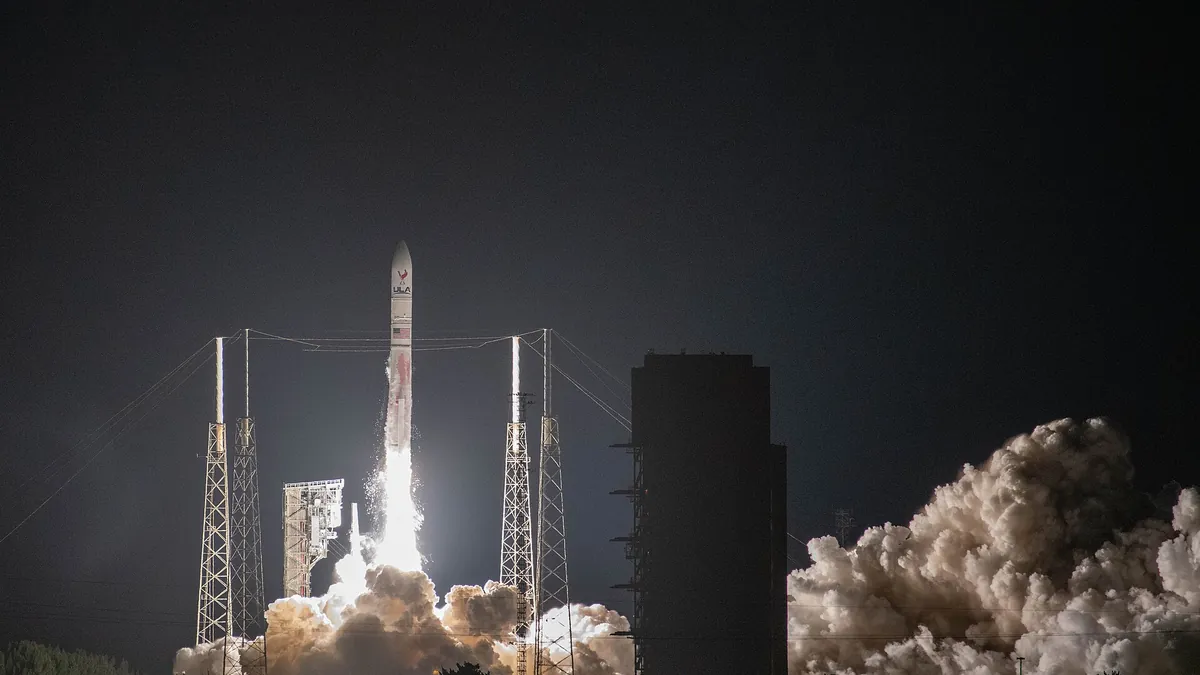
Archive image · Photo: U.S. Space Force photo by Airman 1st Class Spencer Contreras / Wikimedia Commons, Public domain (cropped and resized)
The US Vulcan rocket is set to lift off again on Friday, 13 November, after nine months on the ground, manufacturer United Launch Alliance (ULA) announced, according to Spaceflight Now. Launching from Cape Canaveral, Florida, it is to carry 40 broadband satellites for Amazon's Leo network. Ars Technica reports that the date still needs range approval. It will be Vulcan's fifth flight since its 2024 debut and the first with six strap-on solid rocket boosters.
The grounding was caused by nozzle failures on the GEM 63XL solid rocket motors built by Northrop Grumman. A nozzle disintegrated on the second flight, and another failed less than 30 seconds after liftoff on the fourth flight on 12 February 2026. Both times the rocket still reached its intended orbit. A team from ULA, Northrop Grumman and the US Space Force "identified several potential contributors", ULA said. These were addressed through nozzle design and process changes, and the flight will use the improved nozzle.
Amazon has booked 38 Vulcan launches, and nearly 400 Leo satellites are already in orbit. According to Spaceflight Now, the second rocket, for the Leo 2 mission, is already assembled. Vulcan is not yet cleared to carry national security payloads again: according to Ars Technica, the Space Force first wants to study data from commercial flights. Because of the delays, it had already moved six missions from Vulcan to SpaceX rockets.