
A look inside the battery: Cornell team cuts costly production step by up to 60%
The first charging of new battery cells costs a lot of time, floor space and power. Using real-time measurements, researchers found faster protocols – tested at a factory in New York State.
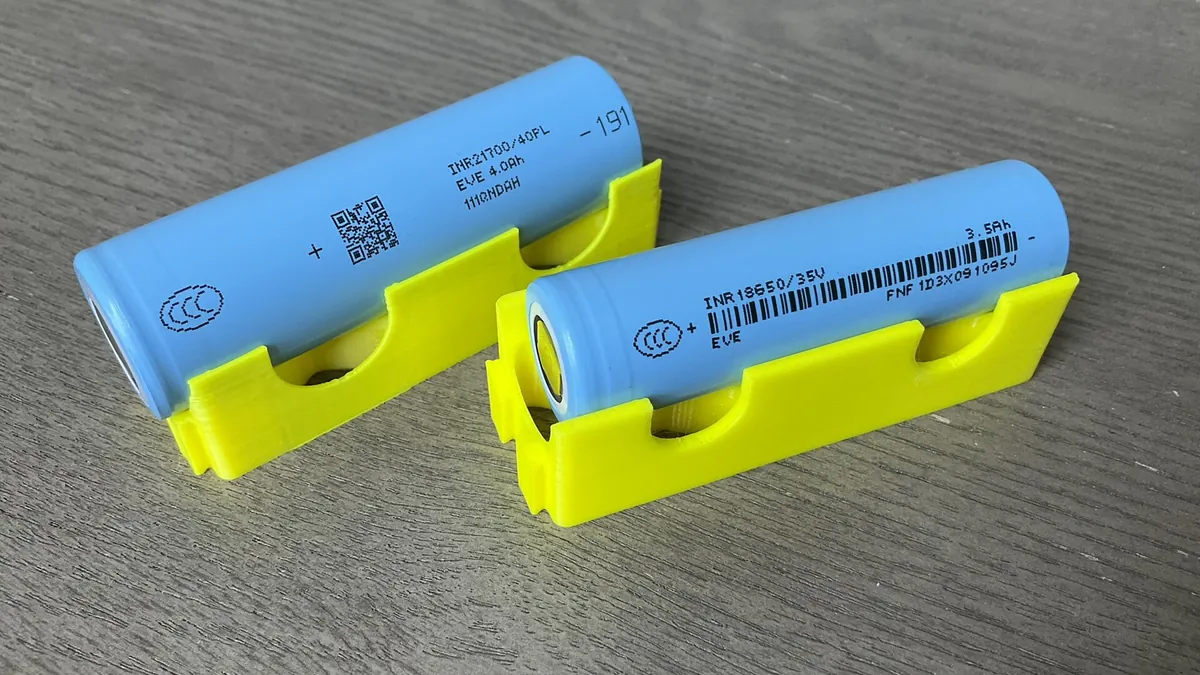
Symbolic image · Photo: Sevenethics / Wikimedia Commons, CC0 (cropped and resized)
Before a new lithium-ion cell is shipped, it goes through formation: during the first charge and discharge cycles, protective layers form that determine its lifetime. This step accounts for about one-third of production costs and a quarter of factory floor space. A Cornell University team led by chemical engineer Vibha Kalra has now observed in real time what happens inside the cell during formation. Lead author is Jantakan Nedsaengtip; the results were published in the journal Energy Storage Materials.
Using operando Raman spectroscopy and operando impedance spectroscopy, the researchers tracked the chemistry and resistance of the forming layers. Slower charging produced more uniform, stable layers, while discharging could be sped up. From this the team developed two accelerated protocols. In tests at the facility of battery maker Charge CCCV (C4V) in Binghamton, cells performed comparably to the conventional process, while formation time was cut by up to about 60 per cent.
According to C4V's Shalabh Gupta, a factory with more than ten gigawatt-hours of annual capacity could save up to 100 million dollars a year, and plant electricity use would fall by an estimated 10 to 15 per cent. "NSF Engine can bring the best teams together as in this case," said Nobel laureate Stan Whittingham, chief innovation officer of the NSF Energy Storage Engine involved in the project. Evaluating formation is typically very trial and error, Kalra said.