
Measuring radiation from the air: PSI method makes helicopter surveys more accurate
A new analysis method from the Paul Scherrer Institute identifies radioactive material from the air more accurately within seconds and pins down amount and location more precisely. Study in Nature Communications.
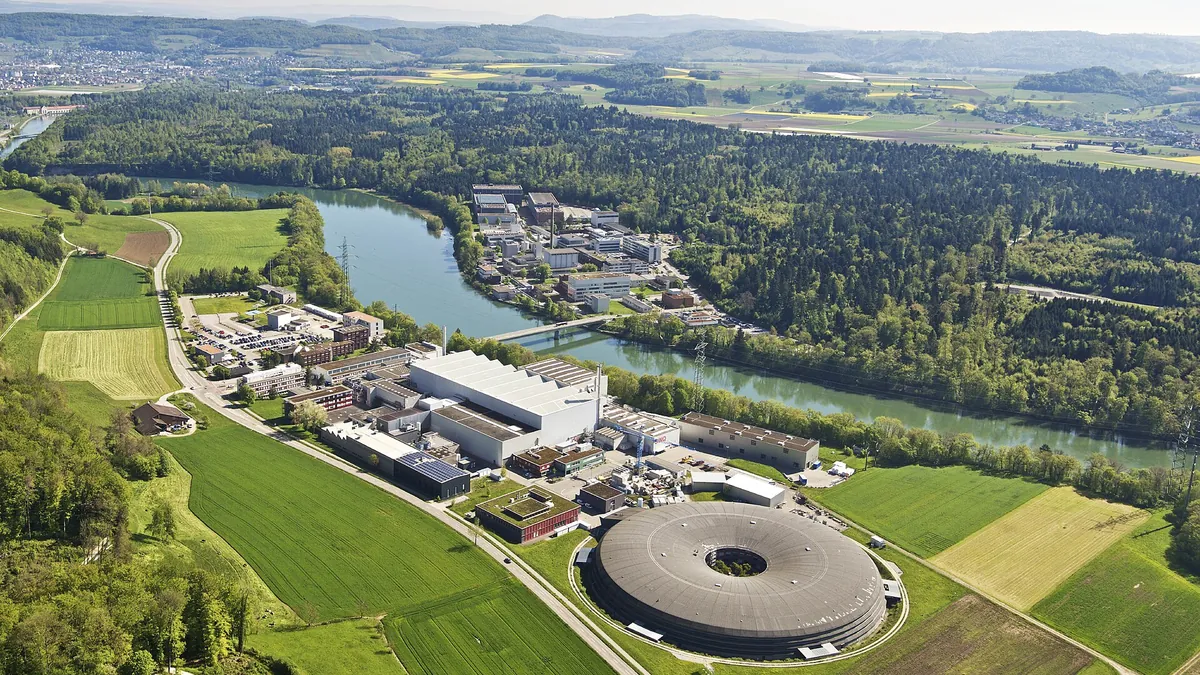
Archive image · Photo: PSI / Wikimedia Commons, CC BY-SA 4.0 (cropped and resized)
After accidents at nuclear facilities or when radioactive sources go missing, helicopters carrying detectors fly over the area to map contamination. Researchers at the Paul Scherrer Institute (PSI) in Switzerland have developed a new analysis method that identifies radioactive material more accurately within a few seconds and determines its amount and position more precisely. The study, “Quantitative mobile gamma-ray spectrometry through Bayesian inference”, was published on 26 October in Nature Communications.
The task is difficult: of around 10,000 gamma photons emitted by a source on the ground, only one reaches the helicopter, according to PSI. Until now, combining several energy values in the measured spectrum was considered the gold standard – this improves the statistics but gives a coarser picture. The new method uses Bayesian statistics to compare thousands of possible source spectra with the measurement. Because the simulation problem is split up, a complete simulation now takes only a few microseconds instead of several hours or even days.
First author David Breitenmoser developed the method during his doctorate at PSI's calibration laboratory. “Every radioactive material has a characteristic fingerprint through its gamma rays,” he says. PSI takes part in aeroradiometry survey flights in Switzerland, for example in May and June 2025 around the Mühleberg and Gösgen nuclear power plants. According to PSI, the method is suited to emergency response and monitoring nuclear facilities, as well as geophysics and nuclear material safeguards.