
Muscle soreness: why it only hits the next day – and why lactic acid is not to blame
Delayed muscle soreness is caused by tiny injuries in muscle fibres and an inflammatory response, not by lactic acid. It usually hurts most after two to three days.
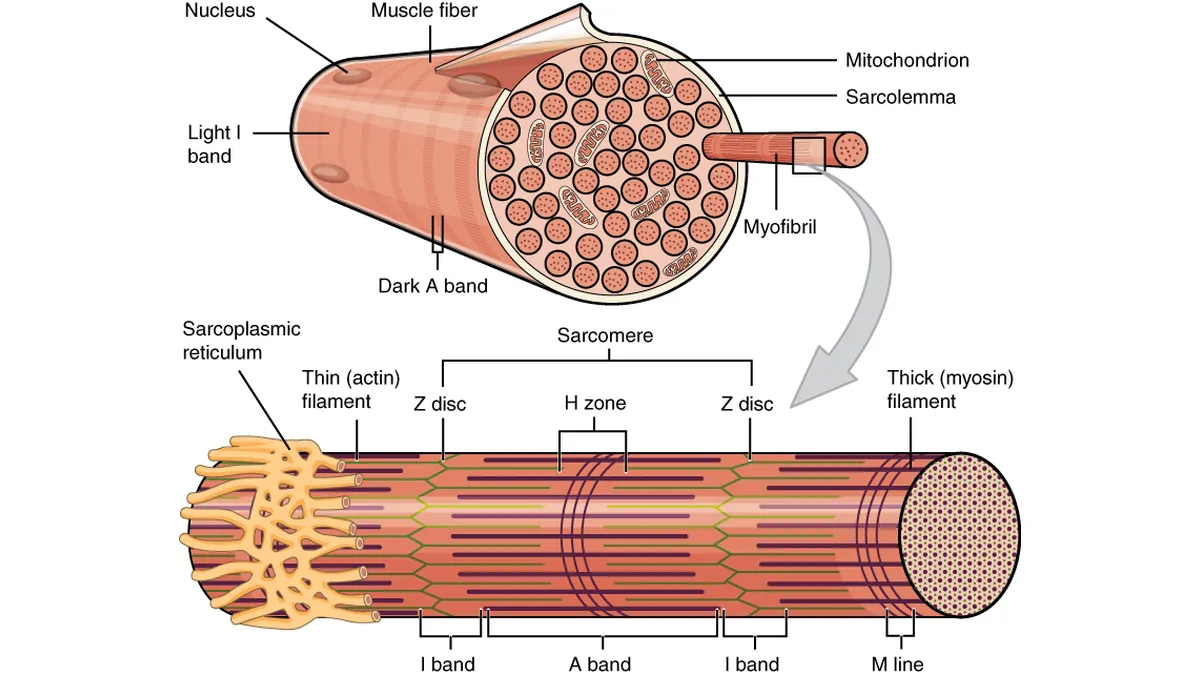
Symbolic image · Photo: OpenStax / Wikimedia Commons, CC BY 4.0 (cropped and resized)
The pain comes late: anyone who trains again after a long break or tries an unfamiliar movement often feels the consequences only the next day. Experts call it delayed-onset muscle soreness (DOMS). A review by sports physicians led by Thilo Hotfiel in the journal Sportverletzung · Sportschaden describes it as an injury to the muscle at a microscopic level. It is mainly triggered by unfamiliar and eccentric loading – movements in which the muscle is stretched under tension, such as walking downhill or slowly lowering a weight.
What happens: according to Apotheken Umschau, fine tears form in the sarcomeres, the smallest contractile units of muscle fibres, especially at the Z-discs that border the sarcomeres. According to the review, the cell damage leads to protein breakdown and a local inflammatory response; symptoms typically peak 48 to 72 hours after exercise. Loss of strength, stiffness, swelling and painful restriction of movement are typical. The old explanation of 'acidification' by lactic acid is considered disproven: as the Pharmazeutische Zeitung reports, citing sports physician Shaun Phillips (University of Edinburgh), lactate levels return to normal 30 to 90 minutes after training, while soreness only sets in one to three days later.
Muscle soreness usually fades on its own within two to three days, at the latest after about eight days. Light movement can support recovery; there is no scientific evidence that stretching helps. Prevention works best: start slowly after breaks or with a new sport and increase the load gradually. Anyone with unusually severe, long-lasting or one-sided pain should have it checked by a doctor.
This article is for information only and is not legal, tax, financial or medical advice. Figures as of the date stated.