
Four more satellites for Galileo: ESA orders from Airbus and Thales Alenia Space
The European Space Agency has ordered two more second-generation navigation satellites each from Airbus and Thales Alenia Space. They are designed to resist jamming and spoofed signals.
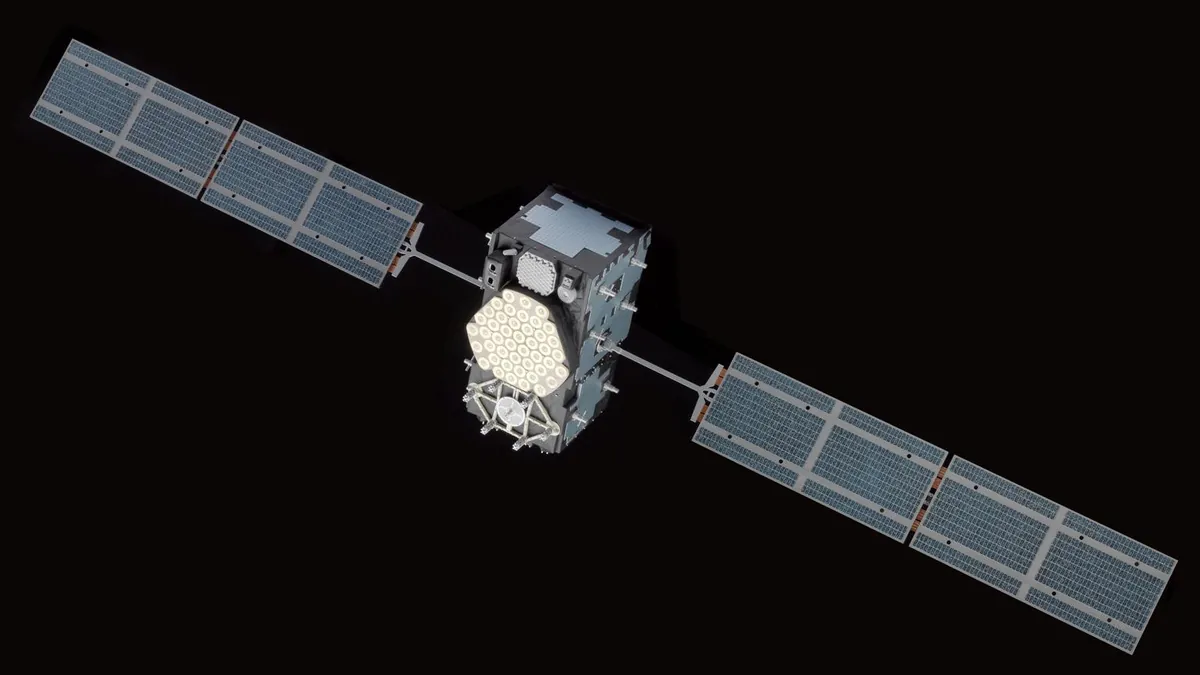
Symbolic image · Photo: This file comes from Science Museum Collections, a website operated by Science Museum Group, a non-departmental public b / Wikimedia Commons, CC BY 4.0 (cropped and resized)
The European Space Agency has ordered two more second-generation (G2) satellites each for Europe's Galileo navigation system from Airbus and Thales Alenia Space. Each manufacturer will now deliver eight G2 satellites instead of six, bringing the second generation to 16 spacecraft in total. ESA signs the contracts on behalf of the EU Agency for the Space Programme (EUSPA). The value was not disclosed.
The new satellites will be identical to those already in development. They will carry fully digital navigation payloads that can be reconfigured in orbit, an improved atomic clock configuration and antennas, and inter-satellite links. According to Airbus, they will be protected against jamming and spoofing. Each will weigh more than two tonnes and is designed for 15 years of service. Airbus will build them in Backnang, Friedrichshafen, Ottobrunn, Getafe and Toulouse.
"These contracts represent an investment in Europe's ability to navigate its own future, independently and with confidence," said Laurent Jaffart, ESA's director of resilience, navigation and connectivity. Galileo currently has 36 satellites in orbit; the first G2 launches are planned from 2028, and the four new satellites are due for delivery in 2031.