
Nature Geoscience: Arctic winter sea ice could shrink more than expected
Cambridge researchers tested climate models against data from 6,000 years ago. The result: future winter sea ice could be about 1 million square kilometers smaller than previously projected.
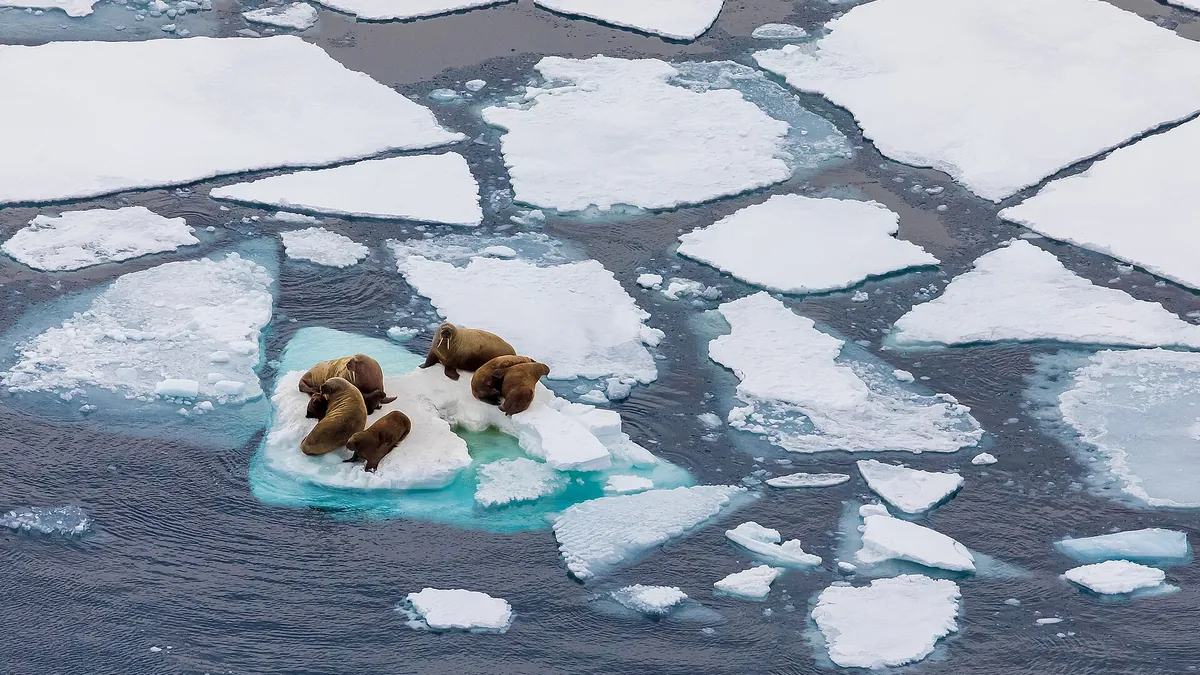
Photo: Kirill.uyutnov / Wikimedia Commons, CC BY-SA 4.0 (cropped and resized)
Arctic winter sea ice could decline more than climate models have so far projected, according to a study in the journal Nature Geoscience led by the University of Cambridge's Scott Polar Research Institute, with Mexico's research center CIMAT. The team assembled the largest database of its kind on the biomarker IP25 – a substance produced by algae living in sea ice that is preserved in seafloor sediments.
Using these data, the researchers tested 27 climate models against the mid-Holocene, about 6,000 years ago. Models that better reproduced the past were given more weight. Overall, the models had predicted more winter ice than the ancient evidence shows. After weighting, future projections are about 1 million square kilometers lower, and the uncertainty of some projections narrows by up to 85%. These are model projections, not measurements.
Observations already show the trend: in March 2025 the winter sea ice maximum was the lowest on record, and the low was matched in 2026. The study suggests models may also underestimate future snowfall in southeastern Greenland and rainfall across the Mediterranean. "It doesn't matter if the warming is natural variation or caused by human activity – if it warms, sea ice is going to melt," lead author Crystal Fu said.