
Longer-lasting zinc-air batteries: TU Darmstadt develops a new catalyst
Chemists at TU Darmstadt have developed a catalyst made of iron-nickel nanoparticles on carbon. In experiments, a zinc-air battery using it survived up to 500 charge and discharge cycles.
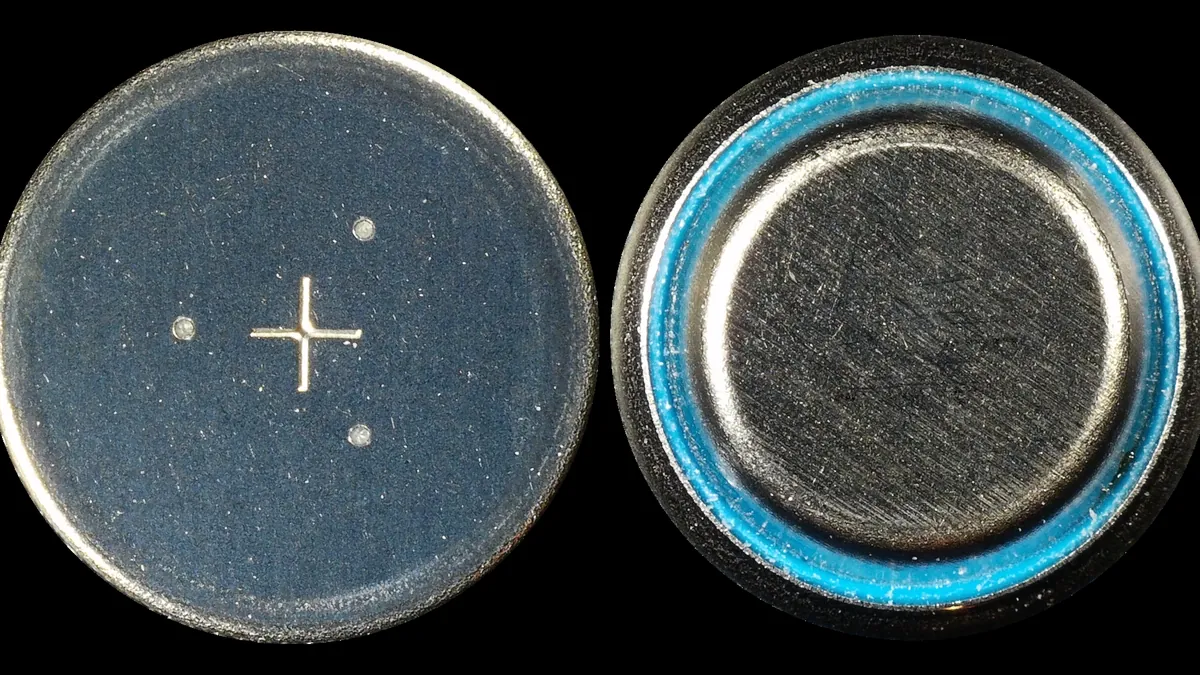
Symbolic image · Photo: Laserlicht / Wikimedia Commons, CC BY-SA 4.0 (cropped and resized)
Zinc-air batteries are seen as a promising alternative to lithium-ion cells: in theory they can store up to five times more energy. Their weak point is lifetime when recharged, because two different oxygen reactions take place at the air electrode during charging and discharging, which require a good catalyst.
A team led by Prof. Jörg J. Schneider of TU Darmstadt's Department of Chemistry bonded spinel particles of iron and nickel, just a few nanometres in size, to carbon nanomaterials whose surface contains nitrogen and phosphorus. The catalyst supports both oxygen reactions. In the experiment, a battery equipped with it could be charged and discharged up to 500 times.
The results were published in the journal Advanced Science. The approach targets the so-called triple junction, where electrolyte, catalyst and atmospheric oxygen meet. The results come from experiments; the university gives no indication of when the technology might be ready for market.