
Eggs up 15 percent, butter down almost a third: how German prices are shifting
Germany's statistics office confirmed September inflation data. Food overall barely rose, while vegetables, hairdressing and social care services became markedly more expensive.
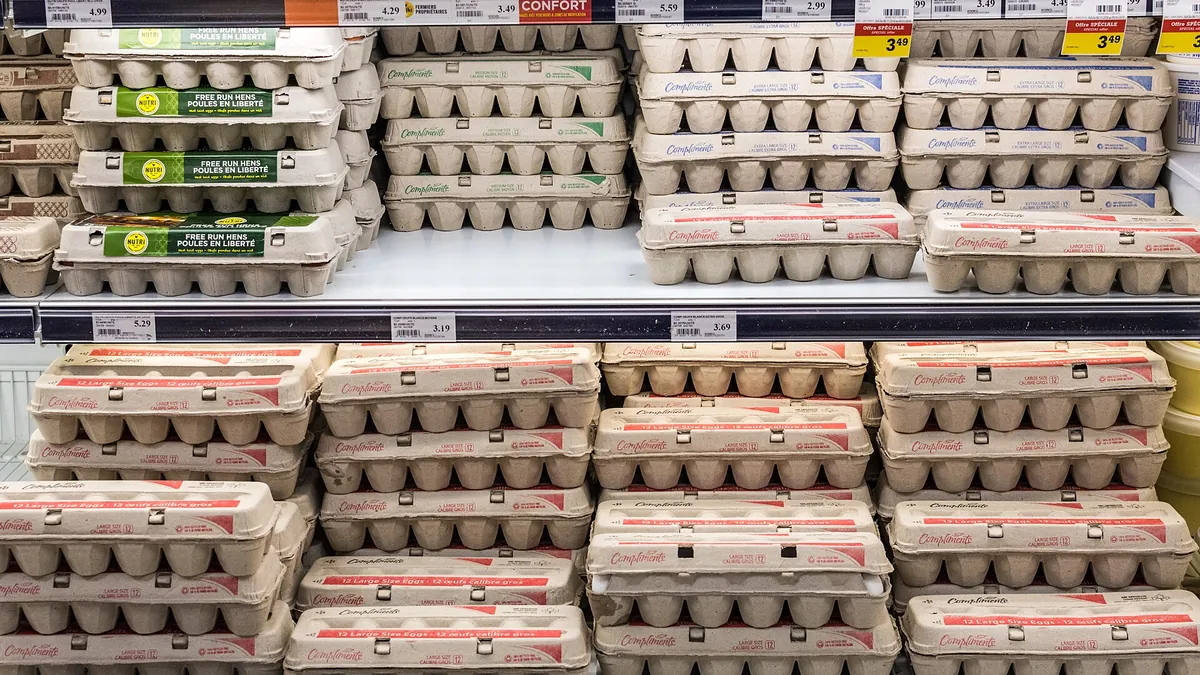
Symbolic image · Photo: Wilfredor / Wikimedia Commons, CC BY-SA 4.0 (cropped and resized)
Supermarket prices in Germany are moving in very different directions. Final figures released by the Federal Statistical Office (Destatis) on Oct. 13 show food overall cost just 0.4 percent more in September than a year earlier. Eggs rose sharply, up 15.2 percent, as did fresh vegetables, up 12.0 percent, while fish and seafood gained 4.5 percent. Compared with August alone, vegetables rose 3.5 percent.
On the other hand, edible fats and oils fell 15.0 percent, and butter dropped as much as 29.5 percent. Dairy products cost 5.5 percent less and fresh fruit 4.9 percent less. Destatis reported a 3.3 percent decline for coffee, tea and cocoa, and household appliances were 2.5 percent cheaper. By contrast, information processing equipment rose 9.2 percent and tobacco 5.6 percent.
Services became 2.7 percent more expensive. According to Destatis, the biggest increases were in services of social facilities, up 6.3 percent, vehicle maintenance and repair, up 4.7 percent, and hairdressing and personal care, up 4.3 percent. Overall inflation stood at 3.3 percent, driven mainly by energy, up 14.9 percent; excluding food and energy it was 2.4 percent. Destatis President Ruth Brand spoke of a “new high for the year.”
This article is for information only and is not legal, tax, financial or medical advice. Figures as of the date stated.