
Murchison in Western Australia: red outback turns into a sea of wildflowers
After unusually heavy rain, the normally arid region 600 kilometers north of Perth is in bloom. NASA satellite images show the change, possibly the best season in nearly 20 years.
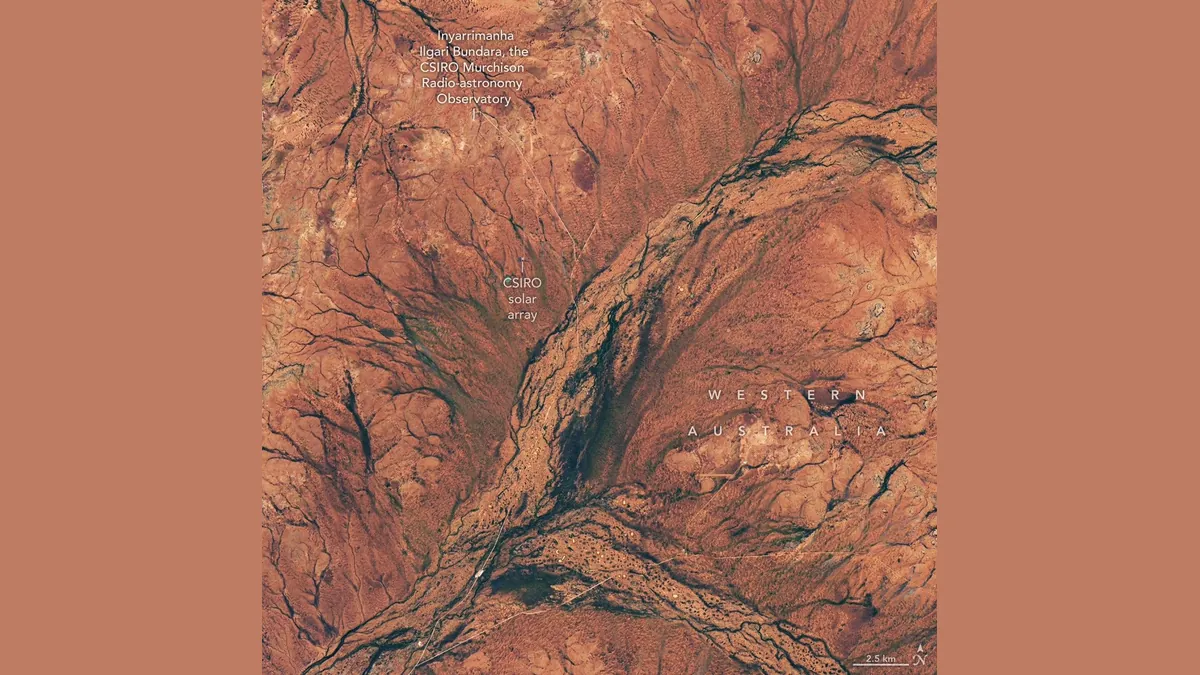
Photo: NASA Earth Observatory / Lauren Dauphin / Wikimedia Commons, Public domain (cropped and resized)
The Murchison region of Western Australia is usually a rust-colored, dry shrubland of grasses, saltbush and mulga, a slow-growing evergreen tree. This southern winter it has turned into a patchwork of green and colorful wildflowers. NASA released Landsat 8 images from late August 2025 and late August 2026 that show the difference from space; ScienceDaily reported on them on Oct. 12.
The trigger, according to Australia's Bureau of Meteorology, was an above-average wet June and a much wetter than normal August. Seeds that had lain dormant in the soil germinated. Local experts say it could be the most impressive wildflower season the area has seen in nearly 20 years, NASA said. Among the blooms were several threatened plant species, recorded on land previously used for livestock grazing.
At the heart of the region lies the CSIRO Murchison Radio-astronomy Observatory, also known as Inyarrimanha Ilgari Bundara. It sits in a “radio quiet” zone with very little interfering signal. The observatory helped track the threatened species. Australia has deep ties to space exploration: the Murriyang telescope in Parkes served as an important receiving station for the Apollo 11 moon landing in 1969.
This article is for information only and is not legal, tax, financial or medical advice. Figures as of the date stated.