
Same text, less trust: students are sceptical of AI sex education
In a US experiment, students rated identical sexual health texts lower when they believed an AI had written them. The researchers see this partly as healthy caution.
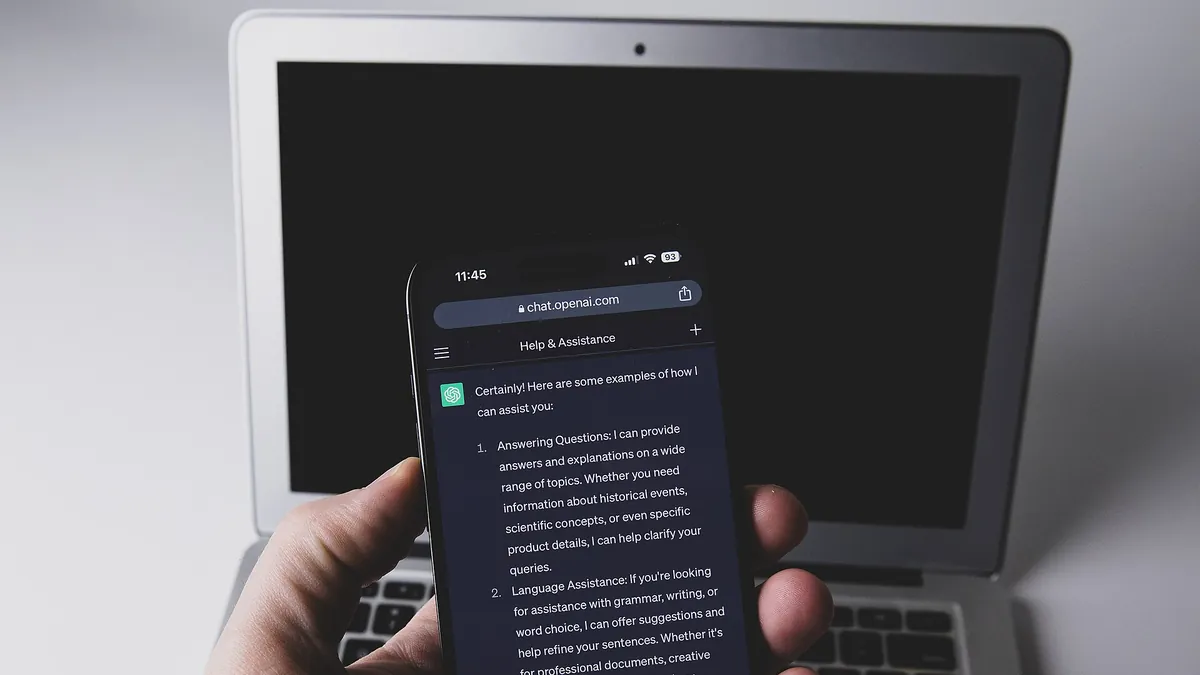
Symbolic image · Photo: Jernej Furman from Slovenia / Wikimedia Commons, CC BY 2.0 (cropped and resized)
How credible do young adults find sexual health information that comes from artificial intelligence? Researchers from the University of Central Florida and the University of Alabama ran an experiment with students at a university in the southeastern US; it was published online on 19 October in the journal Archives of Sexual Behavior. Of 420 participants, 266 were analysed after quality checks – on average 22 years old, 63.2 per cent women. All read the same three texts on sexual communication, body image, and pleasure and safety – in every case written by ChatGPT-3.5. But the stated author was either an AI, an academic expert, or a health professional or peer from the community.
The supposed source made a clear difference: texts labelled as AI-generated scored lower than supposed expert texts on all five criteria – accuracy and clarity, warmth and helpfulness, trustworthiness, self-efficacy and willingness to act. On trust and willingness to act they also trailed the community texts. The ranking was especially clear for pleasure and safety, while for sexual communication there was no difference in willingness to act. The researchers interpret the lower trust partly as possible appropriate caution and see AI as a supplement to human guidance rather than a replacement.
The study has limitations: only students from one university took part, mostly women; the questionnaires were not formally validated, the texts came from an older AI model, and intentions rather than actual behaviour were measured. A second study in the same journal, published on 20 October, looks at the other side: a team from Université Laval, Université de Montréal and UQAM had ChatGPT-3.5 answer 393 anonymised questions sent by 14- to 16-year-olds to a support service. The answers emphasised self-care, open communication and seeking support; the authors see potential for comprehensive sex education.
This article is for information only and is not legal, tax, financial or medical advice. Figures as of the date stated.