
Zinc-iodine battery: zeolite with single iron atoms survives 6,800 charge cycles
A team from Singapore, China and Taiwan uses a porous mineral framework with single iron atoms as an electrolyte, making aqueous zinc-iodine batteries last much longer.
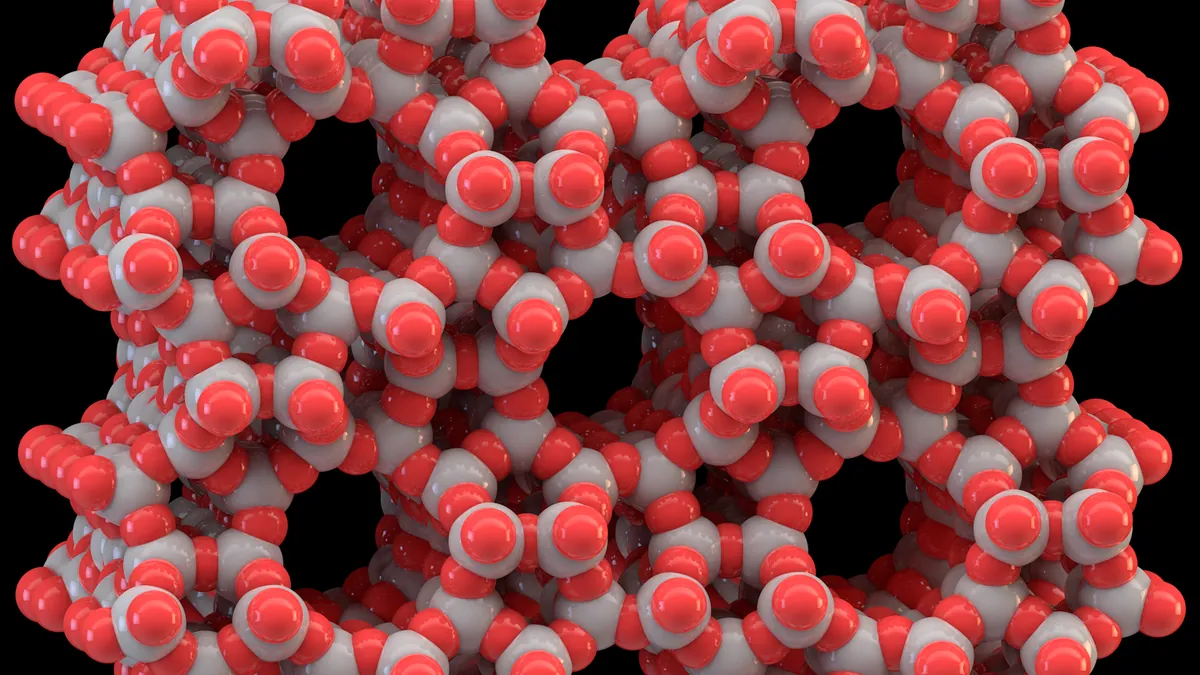
Symbolic image · Photo: Thomas Splettstoesser (www.scistyle.com) / Wikimedia Commons, CC BY-SA 4.0 (cropped and resized)
Zinc-iodine batteries use an aqueous electrolyte based on zinc sulfate. Problems arise from dissolved iodine species that shuttle between the electrodes and from uneven zinc deposits. Researchers at the National University of Singapore, Hainan University and other institutions in China and Taiwan present a quasi-solid electrolyte in Nature Communications, published online on Oct. 24.
They combine zeolites – porous minerals – fitted with single atoms of iron, cobalt, nickel or copper with a zinc sulfate solution. The iron version performed best: it speeds up iodine conversion, curbs polyiodide shuttling, stabilises the water and makes zinc deposit evenly.
At a high current of 4 amperes per gram, the cell still delivered 81.2 milliampere-hours per gram of iodine after 6,800 cycles. In pouch cells, a design closer to practical use, it reached 147.6 milliampere-hours per gram of iodine after 200 cycles, or 52 per gram based on the whole positive electrode.