
Memory chips of the future: 6.4-picosecond pulses write magnetic bits
Nature Electronics highlights two advances in magnetic memory (MRAM): an extremely fast, low-energy write process from Singapore and an optimisation machine from China.
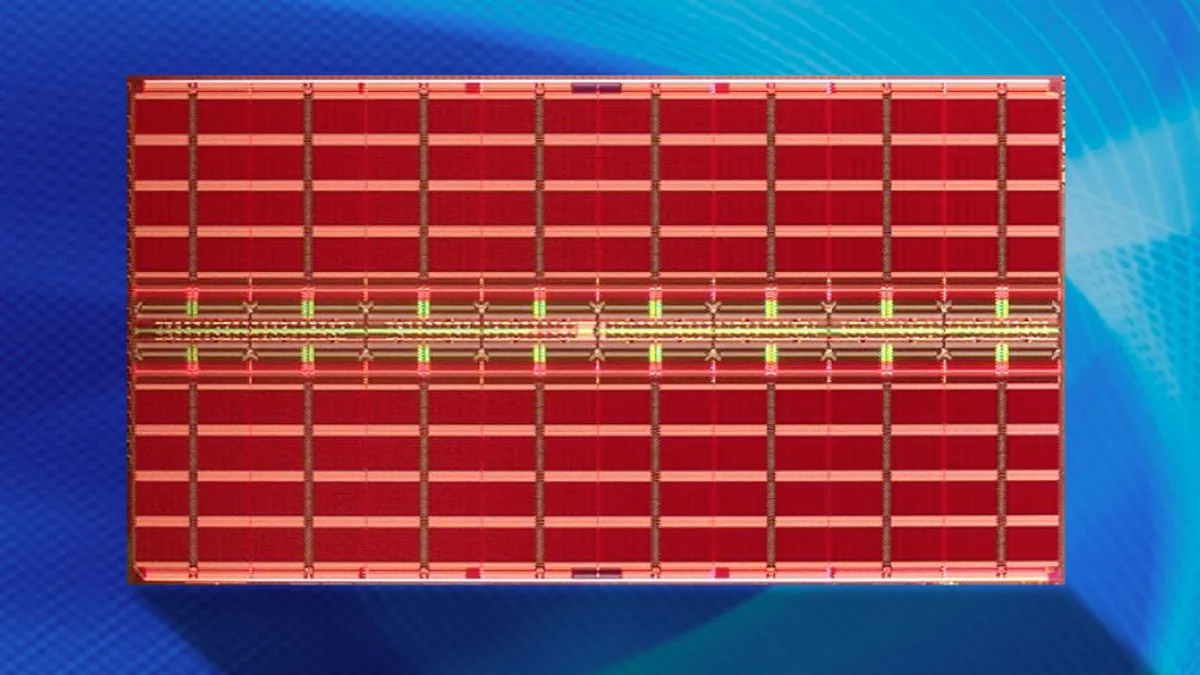
Symbolic image · Photo: Steve Jurvetson from Los Altos, USA / Wikimedia Commons, CC BY 2.0 (cropped and resized)
Magnetic random-access memory (MRAM) is based on magnetic tunnel junctions; data is written by switching the magnetisation of one layer. The latest issue of the journal Nature Electronics, whose editorial appeared on Oct. 23, focuses on the technology. A team led by Hyunsoo Yang of the National University of Singapore has built an on-chip pulse generator that produces current pulses as short as 6.4 picoseconds.
These can switch magnetic layers via so-called spin-orbit torque. Shortening the pulse from 100 microseconds to 6.4 picoseconds cuts the required writing energy by four orders of magnitude, according to the editorial. Until now such short pulses usually required bulky laser-driven switches. The aim is operation in the terahertz regime so the technology can compete with conventional CMOS electronics.
A second study by Weisheng Zhao of Beihang University and partner companies uses voltage-controlled MRAM with 96,000 so-called spins as an Ising machine. It solves optimisation problems of the kind found in integrated circuit design, with spin updates in under one nanosecond and less than 40 femtojoules per spin.