
From scrap to lightning shield: laser turns short carbon fibres into conductive films
Researchers in Ningbo use lasers and graphene to bond carbon-fibre waste. The films are about eight times stronger, conduct far better and could de-ice aircraft and protect them from lightning.
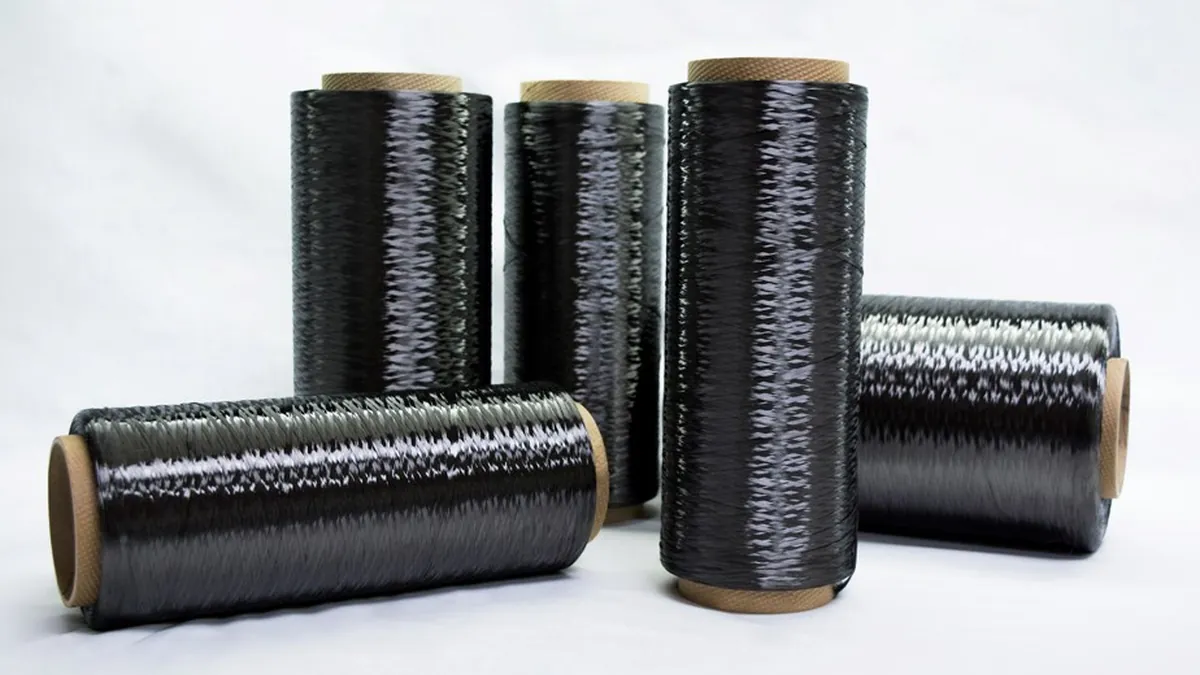
Symbolic image · Photo: texdata.com / Wikimedia Commons, CC BY-SA 4.0 (cropped and resized)
Carbon fibre production leaves behind large amounts of short, chopped fibres. Because they are not continuous, they are hard to put to high-value use. A team at the Ningbo Institute of Materials Technology and Engineering of the Chinese Academy of Sciences has developed a roll-to-roll laser process for them and presented it in the journal Nature Communications on Oct. 25.
The short fibres are treated with a liquid precursor. The laser creates so-called laser-induced graphene at the points where fibres touch, linking them mechanically and electrically. According to the authors, tensile strength rose from 4.1 to 32.2 megapascals and electrical conductivity from about 1,224 to just over 15,150 siemens per metre.
The study says the films are suited to electrothermal de-icing. With an added copper layer they also protect against lightning strikes about as well as aluminium mesh while being around 15% lighter. A custom-built laser platform is meant to allow larger-scale production, with lightweight functional films for aerospace as the goal.