
Inspired by sea cucumbers: Waterloo hydrogel helps tendons heal, then dissolves
Researchers at the University of Waterloo have developed a hydrogel whose stiffness can be tuned to different tissues. In rats, tendons healed better with it than with stitches alone.
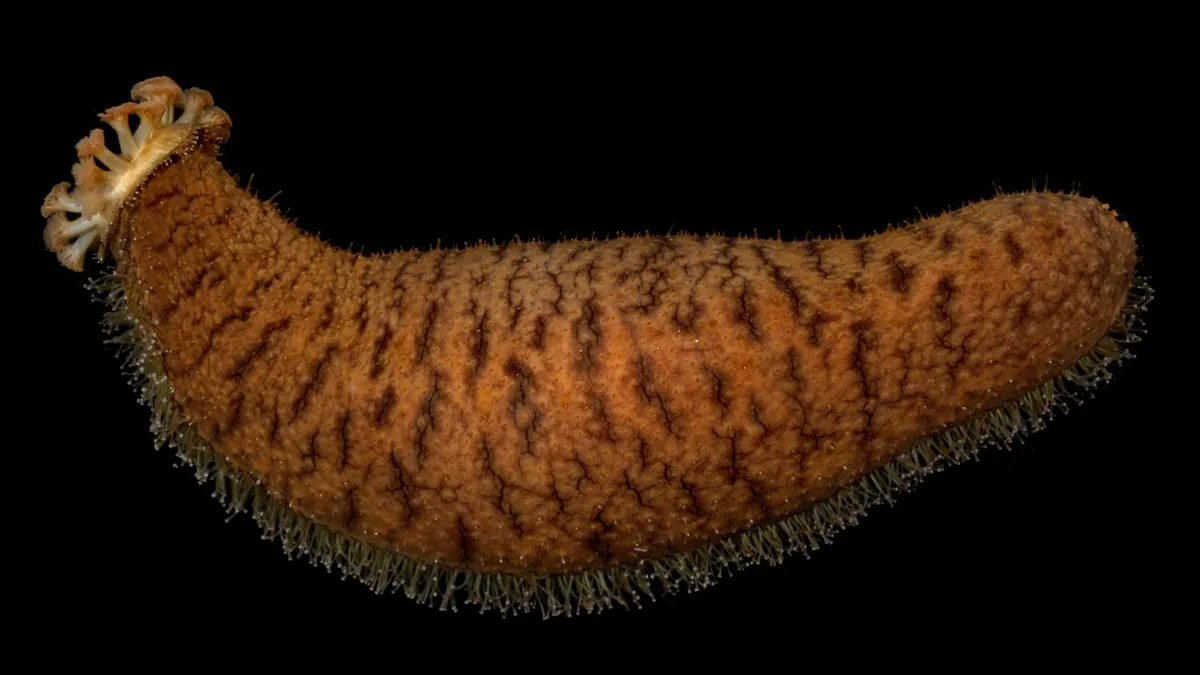
Symbolic image · Photo: François Michonneau / Wikimedia Commons, CC BY 3.0 (cropped and resized)
A team at the University of Waterloo in Canada has developed a water-rich hydrogel inspired by sea cucumbers – animals that can change the stiffness of their bodies. The material acts as a temporary scaffold on which new tissue can grow and is broken down by the body within about eight weeks. The study was published in the journal Advanced Functional Materials; the university presented it on 20 October.
The stiffness can be tuned precisely: the researchers freeze the material to form its internal structure and then soak it in specially prepared salt solutions that make it softer or firmer. The team sees possible uses in tendons, muscles, cartilage, skin and delicate tissue, for example in the brain. In a preclinical study, damaged tendons in rats healed better with the gel than with stitches alone, with more organised new tissue.
The nearly four-year project was led by Youchao Teng under the supervision of mechanical engineering professor Yimin Wu, with researchers from UCLA and the University of Louisville among those involved. Different soft tissues do not all need the same scaffold, Wu stresses. Before use in humans, tests in larger animals and clinical trials are needed. Wu and Teng have applied for two patents and founded a company.