
Thermal cameras warn of elk: Virginia tests a mobile wildlife warning system
Solar-powered trailers with thermal cameras detect wildlife on the road and switch on warning signs. In the pilot, detection accuracy reached 97 percent.
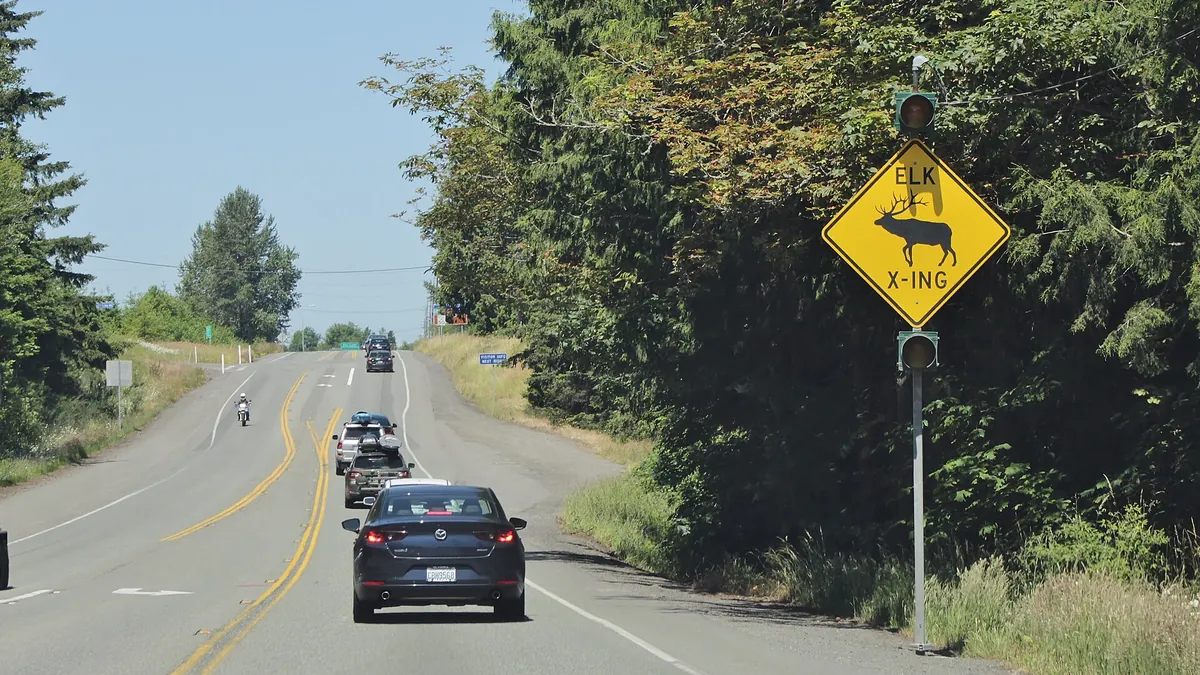
Symbolic image · Photo: SounderBruce / Wikimedia Commons, CC BY-SA 4.0 (cropped and resized)
The Virginia Tech Transportation Institute (VTTI) has tested a mobile warning system against wildlife collisions. For a year, eight solar-powered trailers stood along a 750-metre stretch of Route 460 in southwest Virginia – a corridor that is home to about 100 elk. Thermal cameras and detection software spot medium and large animals on the road and shoulders, and dynamic message signs then warn approaching drivers.
According to initial results, the system detected medium and large wildlife with 97 percent accuracy. Radar units collected data on more than 10,000 vehicles: approaching activated signs, drivers slowed by an average of 3 mph (just under 5 km/h). The trailers send their data to a central hub; the mountainous terrain made communication a challenge.
The pilot ended in September 2026 and data analysis is ongoing. The project is sponsored by the Virginia Department of Transportation (VDOT); Crosstek supplied the cameras and detection software, and T-Mobile provided 5G and satellite connectivity. The aim is to reduce the risk of crashes while protecting the elk in their habitat, says VTTI engineer Jean Paul Talledo Vilela. According to a feasibility study, an elk collision costs more than $80,000 on average.