
Study: beef and dairy weigh more than twice as heavily on a 20-year climate horizon
A UCLA analysis in Frontiers in Sustainable Food Systems counts methane over 20 rather than 100 years – making beef and dairy more than twice as impactful on the climate.
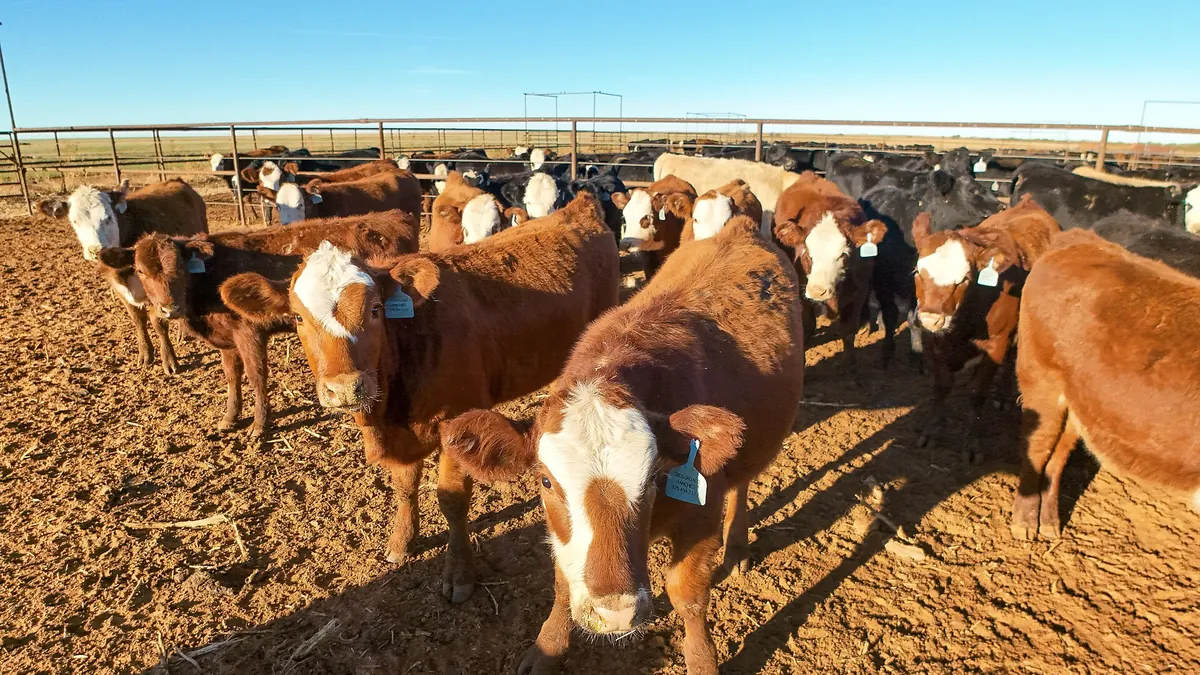
Symbolic image · Photo: Quintin Soloviev / Wikimedia Commons, CC0 (cropped and resized)
Researchers at the University of California, Los Angeles (UCLA), together with the environmental group Center for Biological Diversity, calculated greenhouse gas emissions for 222 foods in 16 categories served in the university's dining halls. The peer-reviewed study was published in the journal Frontiers in Sustainable Food Systems; the group presented it on 19 October 2026. The senior author is environmental engineer Jennifer Jay (UCLA).
The key is the time horizon: the authors compared global warming potential over 20 years (GWP20) with the standard 100-year value (GWP100). Over 20 years, beef and dairy weigh more than twice as heavily. The reason is methane, which according to the release is more than 80 times as potent as CO2 over 20 years but leaves the atmosphere faster. "The 100-year timeframe that's been in use was chosen arbitrarily," Jay said.
For context: this is a calculation using emission factors for a specific menu, not new measurements; the release gives no uncertainty ranges. The choice of metric does not change the amount of emissions, only how they are weighted over time. The analysis was produced with an organisation that campaigns against high meat consumption; it also launched a "Planetary Calculator" for the climate, land and water footprint of food.