
Glaciers: daily weather in models lifts sea-level projection by 5 to 10 percent
A Nature Communications study by ETH Zurich and VUB simulates more than 12,500 glaciers day by day instead of monthly – and finds greater ice loss by 2100.
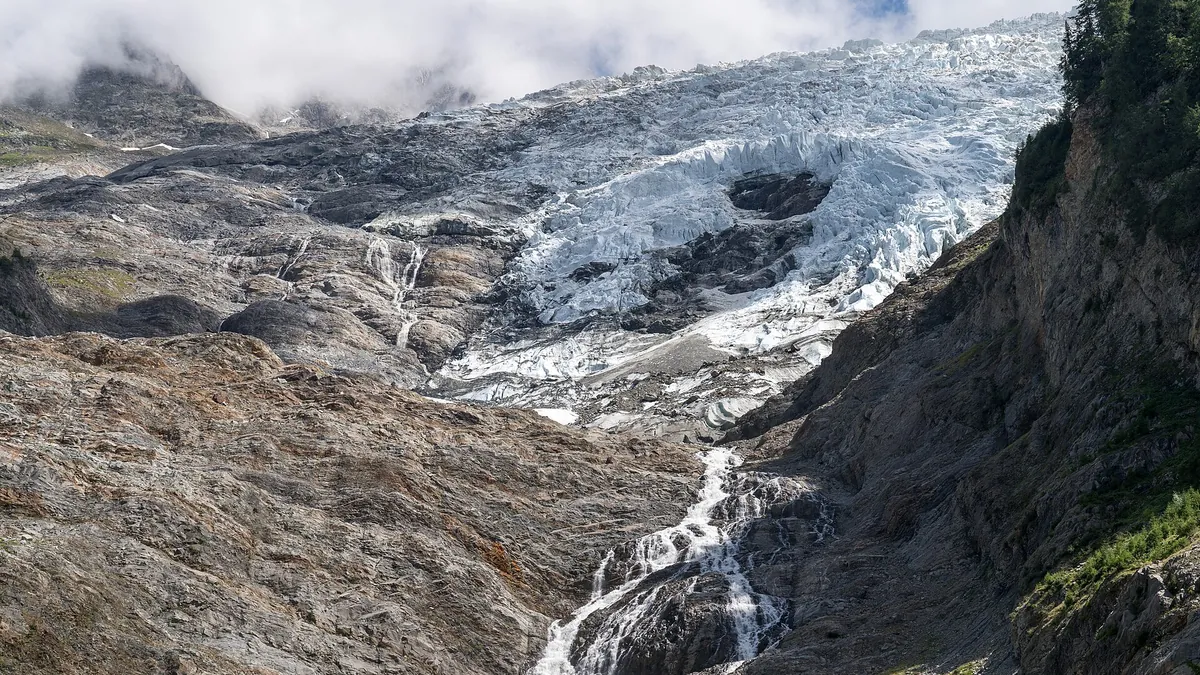
Symbolic image · Photo: Alexkom000 / Wikimedia Commons, CC BY 4.0 (cropped and resized)
A team led by first author Lander Van Tricht (ETH Zurich, WSL and Vrije Universiteit Brussel, VUB), together with glaciologists Matthias Huss and Harry Zekollari, extended the Global Glacier Evolution Model (GloGEM) to run on daily rather than monthly weather data. The study was published on 19 October 2026 in Nature Communications. It covers more than 12,500 glaciers holding 94 percent of the world's glacier ice volume.
Checked against measurements: the daily version better reproduces observed mass loss in exceptional years – 2022 and 2026 in the Alps, 2023 in western North America, 2024 on Svalbard and 2025 in Central Asia. A few very warm days can strip away protective snow cover and expose darker ice that melts faster. "Glaciers don't respond to monthly averages, but to the weather they experience every single day," Van Tricht said.
Projection: for the 21st century, the daily model yields a 5 to 10 percent higher glacier contribution to sea-level rise than the monthly version. This is a modelling result; the releases give neither absolute values in millimetres nor the emission scenarios used. According to Zekollari, the timing and intensity of meltwater runoff also shift – which matters for millions of people who depend on glacier water.