
Solid-state batteries draw closer: CATL expands, GBT starts series production
The next battery generation is gathering pace in China: market leader CATL is planning an extra 25 GWh with a partner, and Greater Bay Technology is mass-producing its first solid-state cells.
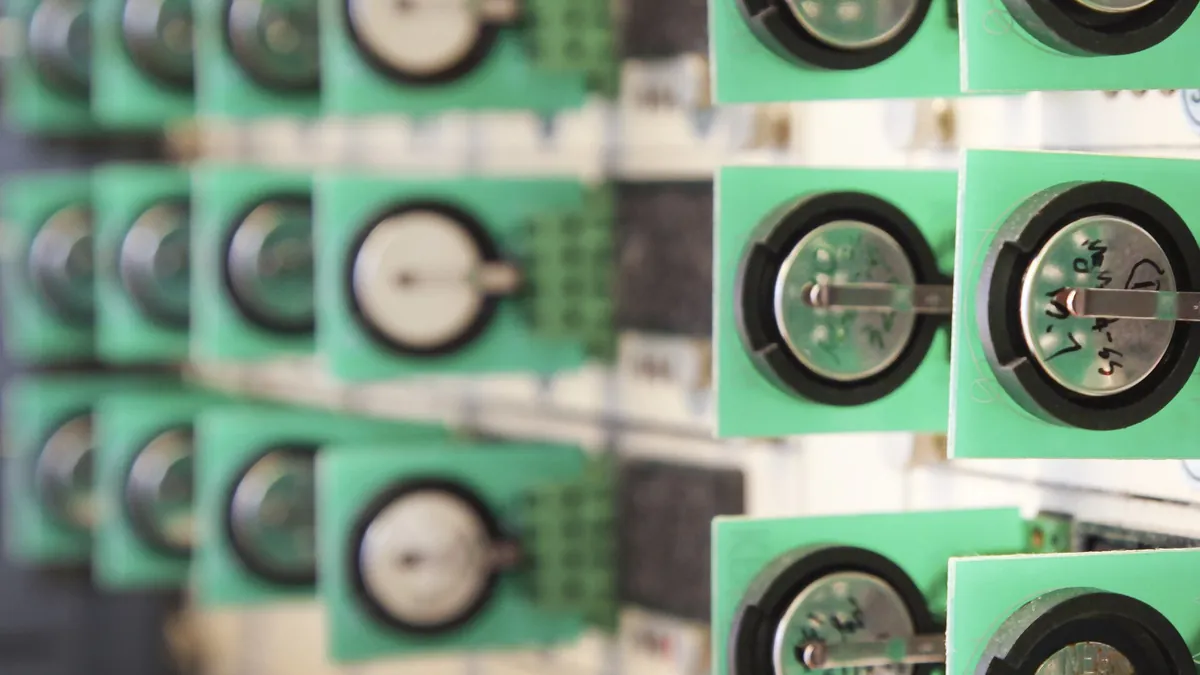
Symbolic image · Photo: U.S. Department of Energy from United States / Wikimedia Commons, Public domain (cropped and resized)
Chinese battery maker CATL and carmaker Changan are expanding their joint cell production. According to Korean and Chinese trade media, the joint venture's annual capacity is to grow by 25 to 75 gigawatt hours (GWh). The plan earmarks 5 billion yuan (around 750 million US dollars) for a 700,000-square-metre facility between Chongqing and Sichuan. Operations are due to start in 2027, with the full additional capacity to be reached within three years. Around 2,500 jobs are expected.
Also in focus is Changan's 'Golden Bell' solid-state battery. According to the manufacturer, it is to reach an energy density of 400 watt hours per kilogram, enable a range of more than 1,500 kilometres and charge from 30 to 80 percent in 9 minutes. Its lifespan is given as more than 5,000 charging cycles. Vehicle tests are planned for 2026 and series production for 2027; the figures have not yet been independently verified. Both companies are also working on sodium-ion batteries.
Greater Bay Technology (GBT) is already a step further: according to electrive, the Guangzhou-based developer started series production of solid-state cells on 13 October – initially 1 GWh in a converted lithium-ion plant. Its electrolyte is filled in as a liquid and only solidifies inside the cell, so existing machinery can still be used. GBT cites energy densities of 260 to 480 Wh/kg depending on cell generation; in a nail penetration test, a fully charged cell neither caught fire nor exploded. Besides electric cars, GBT is targeting air taxis, stationary storage and special-purpose vehicles.