
Bladder cancer: US expands approval of immunotherapy Anktiva
The FDA now allows the drug for papillary tumours when standard BCG therapy has failed. The decision rests on data from a different patient group.
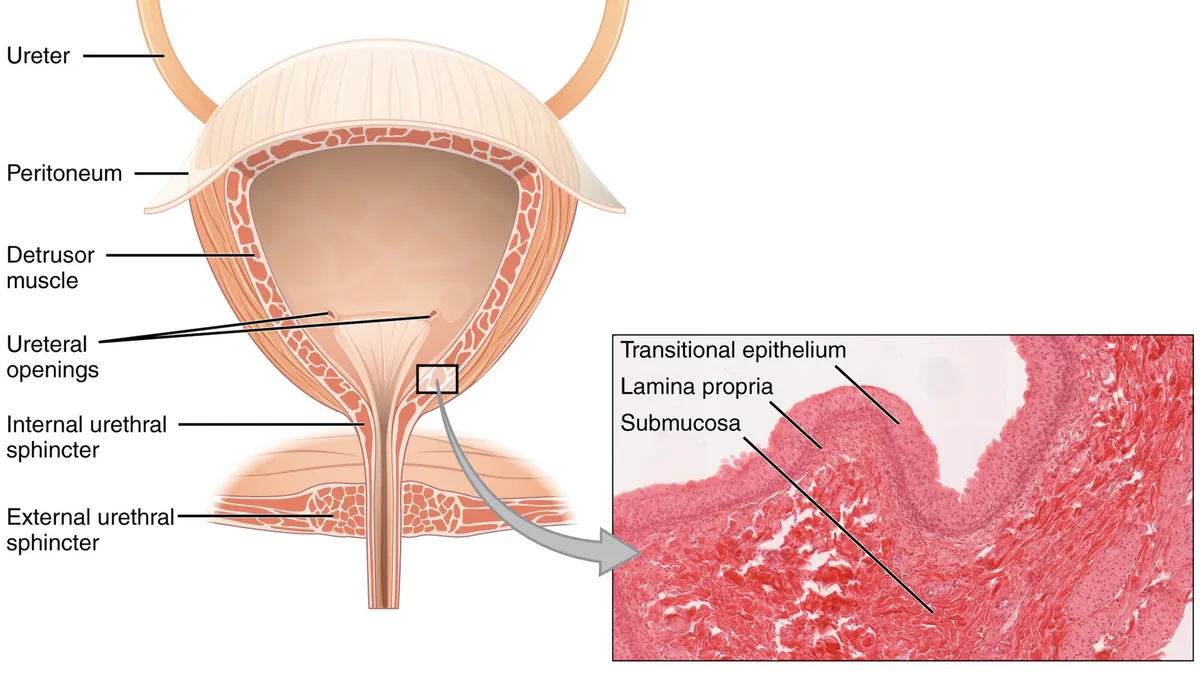
Symbolic image · Photo: OpenStax College / Wikimedia Commons, CC BY 3.0 (cropped and resized)
On 14 October, the US Food and Drug Administration expanded the approval of the immunotherapy Anktiva (nogapendekin alfa inbakicept). The drug is given directly into the bladder together with the tuberculosis bacterium BCG. It is now also approved for adults with high-grade non-muscle-invasive bladder cancer who have papillary-only tumours and no longer respond to BCG. Until now, the 2024 approval covered only patients with carcinoma in situ, a flat form of the tumour (with or without additional papillary tumours). According to Fierce Pharma, it is the first drug approved in the US specifically for this papillary group.
The FDA relies on the QUILT-3.032 study of 77 patients with carcinoma in situ. In 62 per cent of them the tumour disappeared completely; among these patients the response lasted at least 12 months in 58 per cent and at least 24 months in 40 per cent. The agency argues that both tumour forms are "aggressive urothelial carcinomas", so the efficacy can be extrapolated. Common side effects listed by the FDA include raised creatinine, pain and blood when urinating, frequent urge to urinate and urinary tract infections.
The decision came almost three months before the January 2027 deadline and after a lengthy dispute: in 2025 the FDA refused to review a first application from manufacturer ImmunityBio – reportedly because a randomised control group was missing. The agency also warns that delaying bladder removal can lead to metastatic and potentially lethal bladder cancer. The approval applies only in the US. Which treatment is suitable in an individual case is decided by patients together with their urologist.
This article is for information only and is not legal, tax, financial or medical advice. Figures as of the date stated.