
German parliament votes on 'early-start pension' of 10 euros a month per child
From 2027 the state would pay 10 euros a month into a stock-based savings account for every child aged 6 to 18. The DGB union federation calls it a sham.
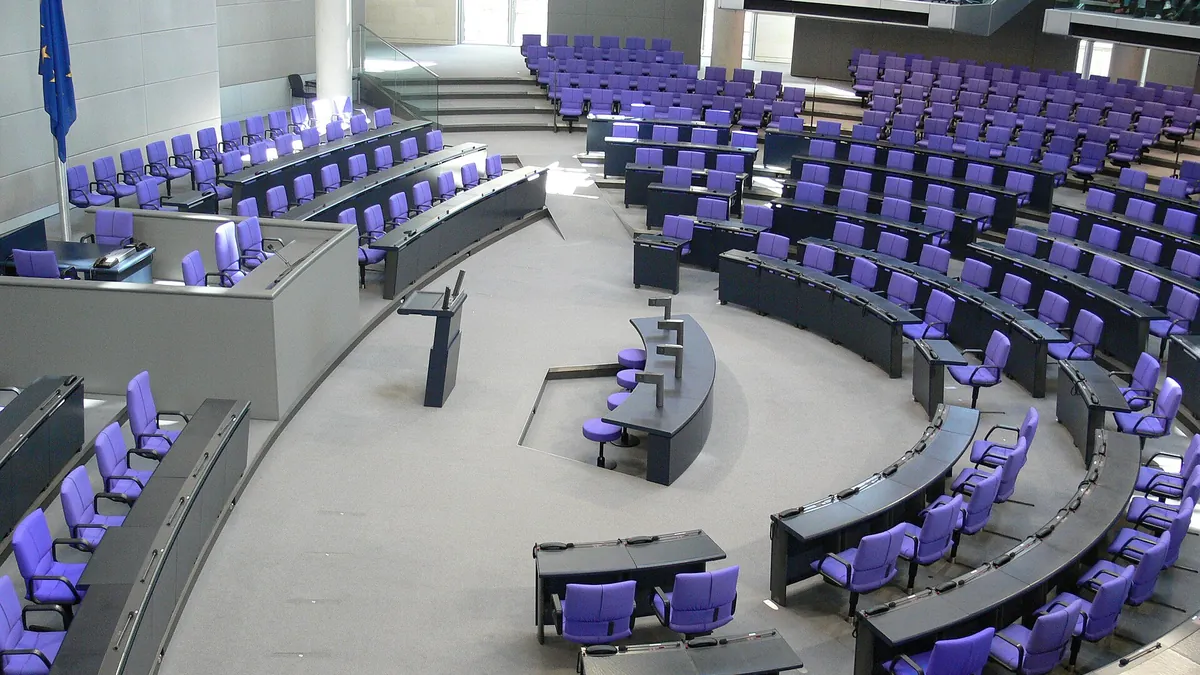
Archive image · Photo: Photo: Andreas Praefcke / Wikimedia Commons, CC BY 3.0 (cropped and resized)
Germany's Bundestag votes Friday on the governing CDU/CSU-SPD coalition's so-called early-start pension. Under the bill, the federal government will pay 10 euros a month into a retirement savings account for every child from age 6 to 18. The law is due to take effect in January 2027 and still needs approval from the Bundesrat, the upper house. Children born in 2020, who turn 6 in 2026, are the first cohort; older children are not eligible.
The money must be invested in broadly diversified global stocks or equity funds. Parents pick a provider with fees capped at 1%, or the funds go into a public vehicle managed by the Bundesbank. Parents and grandparents may add up to 6,840 euros a year, and payouts generally begin no earlier than age 65. The government expects costs of 198 million euros a year at first, rising to 411 million euros by 2030.
Assuming 7% annual returns, the state payments alone would grow to about 53,000 euros by age 65, according to the Finance Ministry, though the government will not cover losses. The banking industry welcomed the plan. The DGB trade union federation called it a sham that "is not a pension and conceals the social and ethical risks of the capital market." Dorothea Mohn of the Federation of German Consumer Organisations (vzbv) called for independent financial education.