
Europe's answer to SpaceX: EU aims for a swift review of satellite alliance 'Bromo'
Airbus, Thales and Leonardo want to combine their satellite businesses. According to Bloomberg, the European Commission is preparing a fast-track antitrust review – but unions and suppliers are sceptical.
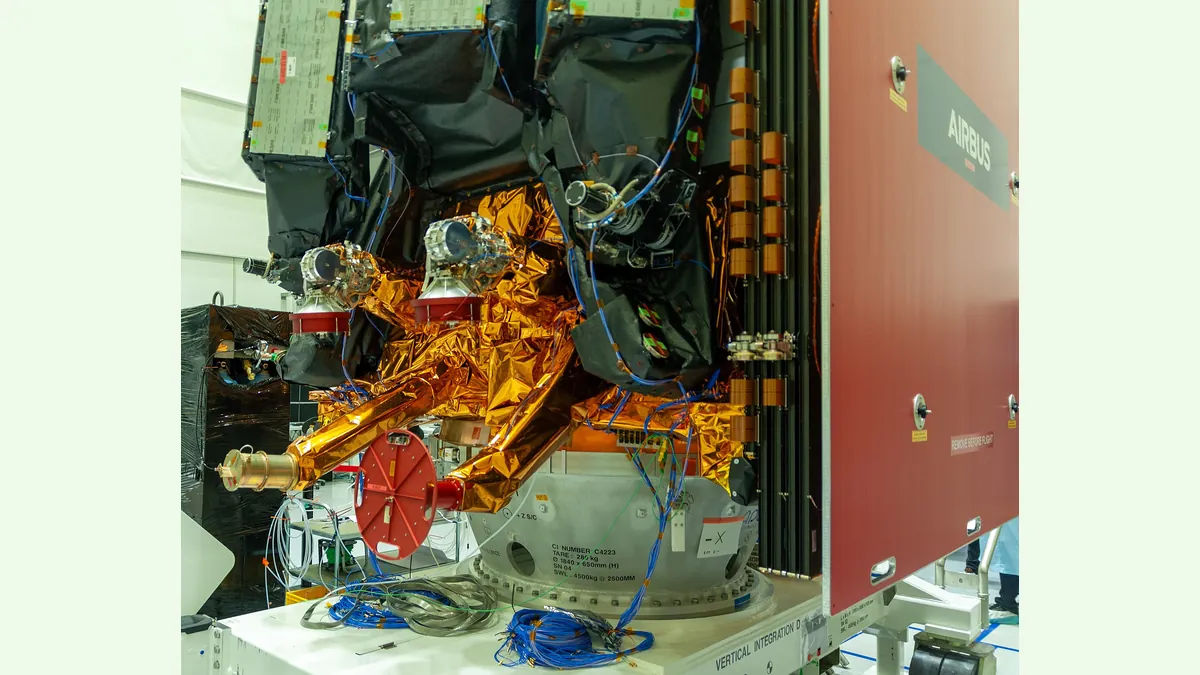
Symbolic image · Photo: Don-vip / Wikimedia Commons, CC BY-SA 4.0 (cropped and resized)
According to a Bloomberg report on Thursday, the European Commission is preparing to fast-track its review of the planned satellite joint venture of Airbus, Thales and Leonardo. The project, known internally as 'Project Bromo', is meant to strengthen Europe's satellite manufacturing and reduce dependence on US providers such as SpaceX. The three groups have not yet formally filed, but Brussels expects an application in the coming weeks. Pre-notification talks with competition officials have reportedly been under way for around a year.
A quick clearance would be possible after an initial review phase of just over a month if the companies offer remedies such as selling parts of their businesses. If concerns remain, an in-depth investigation lasting several months could follow. Commission President Ursula von der Leyen has praised Bromo as a potential European champion deserving high-level support. Competition Commissioner Teresa Ribera, by contrast, stressed that the project will not be approved automatically and must meet merger rules like any other transaction.
In Europe, there is a debate over how far to back globally competitive companies and how strongly to limit market concentration. Unions and suppliers have raised concerns about possible job cuts and reduced competition, and smaller manufacturers fear being squeezed out by a large joint venture. In parallel, the EU is pushing ahead with its own IRIS² satellite network. SpaceX shares fell around 3.2 percent on Thursday, according to Investing.com.