
Combustion engine phase-out: Berlin and Paris agree on common line
Merz and Macron want to join forces on the EU car package: 90 percent less CO2 by 2035 with no obligation to offset the rest. The two countries' environment ministries have yet to agree.
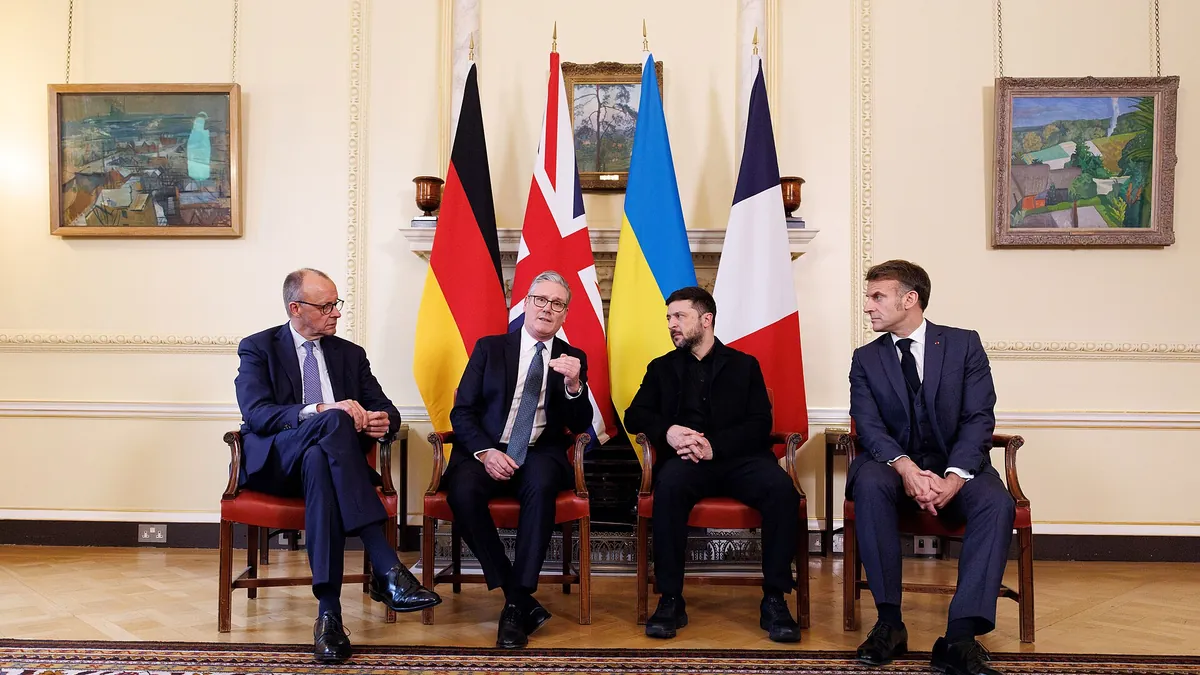
Archive image · Photo: Prime Minister's Office, 10 Downing Street (UK Government) / Wikimedia Commons, OGL 3 (cropped and resized)
The German Chancellery and the French presidential palace have agreed on a joint position on the EU car package, according to Table.Briefings. Chancellor Friedrich Merz (CDU) and President Emmanuel Macron aim to make an agreement in the EU Council easier. At the core of the proposal: new cars should emit 90 percent less CO2 by 2035 than in 2021, without the remaining 10 percent having to be offset. The European Commission had proposed 90 percent plus compensation through sustainable fuels and green steel.
A two-year transition period is planned for the 2030 targets. The crediting of plug-in hybrids is to remain unchanged until 2030, and a new vehicle class is to be created for cars that run exclusively on sustainable fuels. On decarbonising company fleets, which Germany had rejected, the paper offers more flexibility than the Commission's proposal; how the Commission's strict “Made in EU” rules will be handled remains unclear.
Coordination between Berlin and Paris is not yet complete: according to the report, the environment ministries of both countries have not yet reached agreement. Government sources said: “Talks are continuing.” The aim of the Franco-German paper is to make it easier for the Council to agree on the Commission's proposal to phase out combustion engines.