
Green hydrogen: TU Wien shows electrolysis can get by with far less platinum
Bipolar plates in PEM electrolysers are coated with platinum. According to TU Wien, 24 nanometres sufficed in tests instead of the usual 200 – saving around 88 per cent of the platinum in the protective layer.
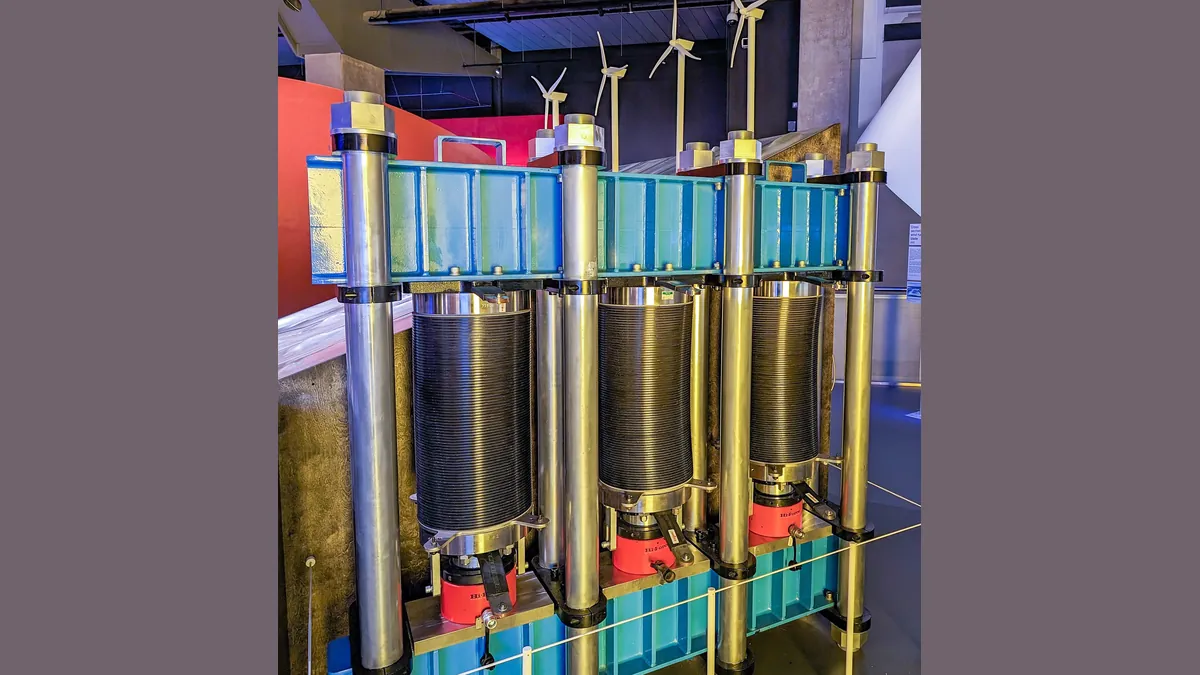
Symbolic image · Photo: The wub / Wikimedia Commons, CC BY-SA 4.0 (cropped and resized)
PEM water electrolysis is seen as a key technology for climate-friendly hydrogen, but it is expensive. One cost driver is the so-called bipolar plates, which according to TU Wien account for up to 30 per cent of system costs. They are usually made of corrosion-resistant titanium, but an oxide layer forms on its surface that hinders the flow of current. The plates are therefore coated with a thin layer of platinum. A team led by Helmut Riedl-Tragenreif of the Institute of Materials Science and Technology has systematically investigated how thick this layer needs to be. The results were published in the journal ACS Applied Materials & Interfaces, and TU Wien presented them on 13 October.
The result: under the conditions tested, a platinum layer just 24 nanometres thick was sufficient. An eight-nanometre layer, by contrast, showed larger defects after electrochemical stress, and significantly more titanium and platinum ions entered the electrolyte. Compared with the 200 nanometres commonly used in industry, around 88 per cent of the platinum in the protective layer could be saved.
"Today, platinum layers several hundred nanometres thick are often used. Our results show how great the potential for savings is here," says Riedl-Tragenreif. What matters most is whether microscopic defects form in the layer – they can trigger a chain reaction in which the titanium oxidises and the coating gradually peels off. According to TU Wien, the optimal thickness also depends on the manufacturing technique and how uniform the coating is.