
Model study: delayed climate action could make the Arctic flip abruptly
New Columbia University and NASA study: if emissions stop too late, the AMOC ocean circulation nearly collapses in the model and the Arctic abruptly cools.
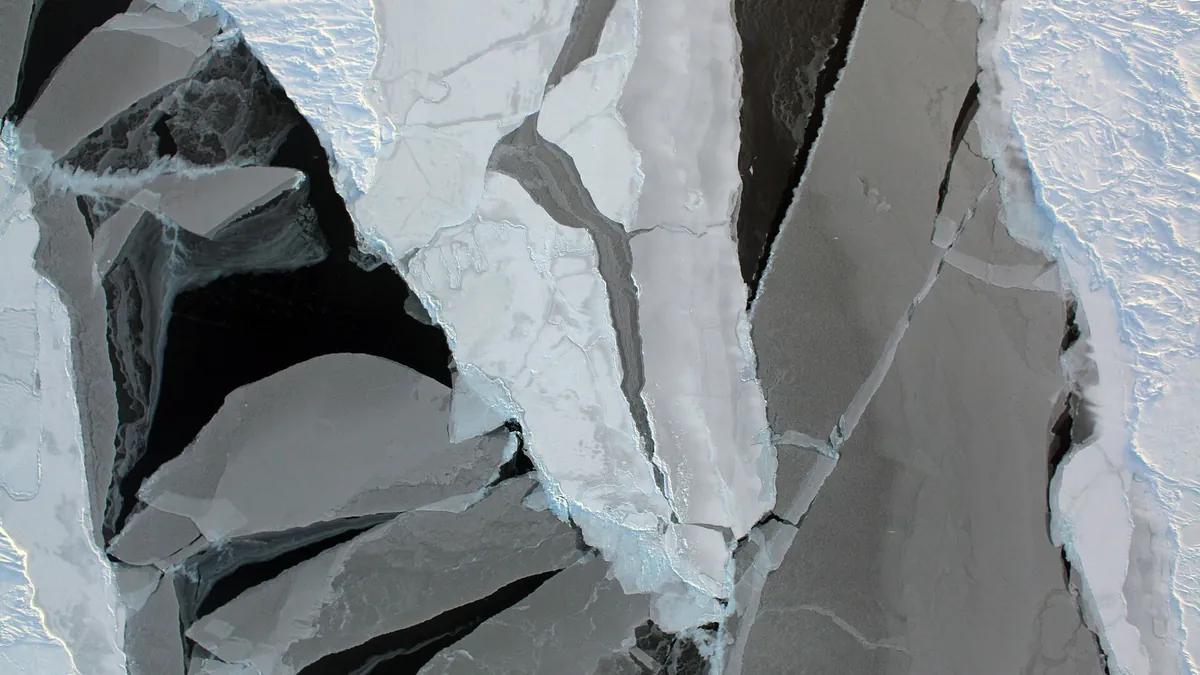
Symbolic image · Photo: NASA Goddard Space Flight Center from Greenbelt, MD, USA / Wikimedia Commons, Public domain (cropped and resized)
A team led by You-Ting Wu of Columbia University in New York, with the Lamont-Doherty Earth Observatory and NASA's Goddard Institute for Space Studies (GISS), reported on 10 October 2026 in Communications Earth & Environment, a Nature Portfolio journal, how the Arctic responds once carbon dioxide emissions stop. The Arctic is warming more than three times faster than the global average. Using an Earth system model, the researchers simulated emissions dropping instantly to zero after humanity has released a cumulative 800 to 2,000 billion tonnes of carbon. These are model experiments, not measurements or a forecast for a particular year.
Global mean temperature stabilises in the simulations after emissions cease. The Arctic, however, splits into two paths: if emissions stop below about 1,700 billion tonnes of carbon, the region keeps warming and losing sea ice. Above that threshold, it cools abruptly and the ice expands. The authors attribute this to a near-collapse of the Atlantic Meridional Overturning Circulation (AMOC), which carries heat northward, amplified by feedbacks from ice reflectivity and the vertical temperature profile. In the simulations, the collapse occurs when mitigation is delayed long enough for global warming to exceed the Paris Agreement's 2C target.
The researchers interpret the transition as "stochastic" tipping: random fluctuations decide whether the system crosses the threshold, while rising greenhouse gases make it more likely. The results come from a single model with six simulations per scenario; the abstract gives no uncertainty range for the 1,700-billion-tonne threshold, and the published text is an early version that may still be edited. The authors conclude that delayed mitigation can, in their model, trigger "an abrupt transition to an alternative Arctic climate state."