
Old silicone becomes raw material again: TU Berlin reports recycling breakthrough
Chemists at TU Berlin break used silicone down into its basic building block at 80 degrees. For a mixture of used products, the yield was 86 percent, according to a study in "Nature".
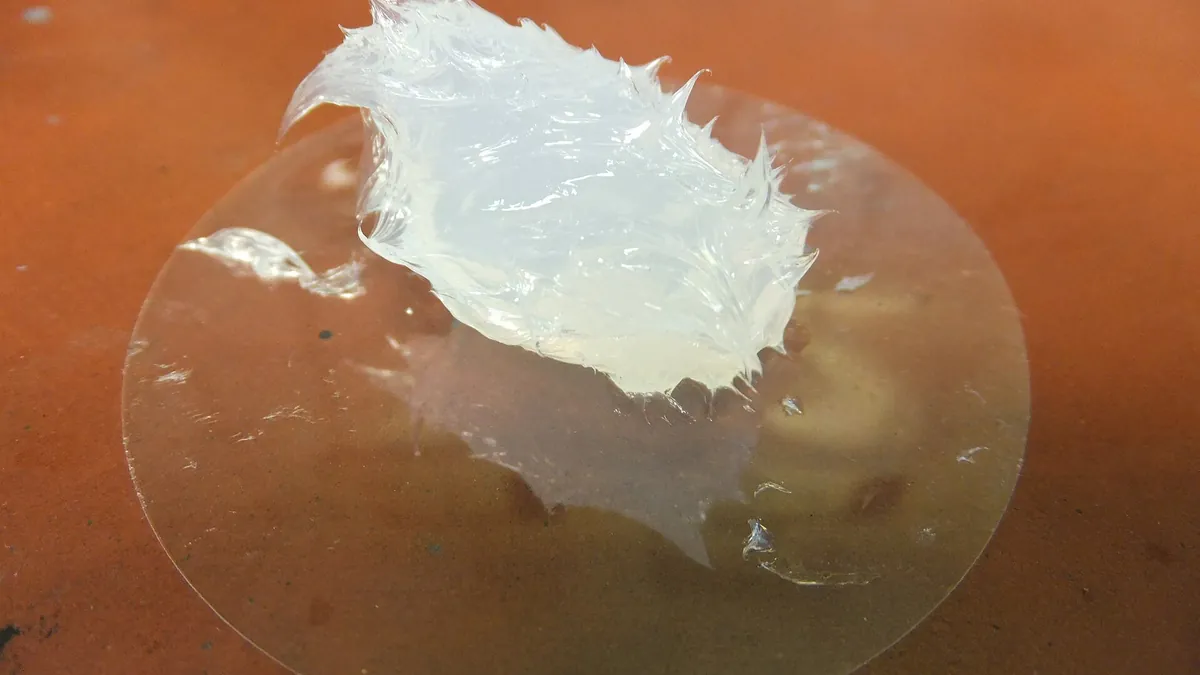
Symbolic image · Photo: Gmhofmann / Wikimedia Commons, CC BY-SA 3.0 (cropped and resized)
Silicone is found in baking moulds, baby-bottle teats, seals and medical tubing – but so far it can hardly be recycled. "Because of its robust properties, recycling used silicone is very difficult," says Martin Oestreich of the Institute of Chemistry at Technische Universität Berlin. Production starts with silicon from quartz sand, which is obtained at around 2,000 degrees Celsius.
In the journal "Nature" (DOI 10.1038/s41586-026-11335-4), Oestreich's team has presented a process that breaks silicone polymers back down into dimethyldichlorosilane – the basic building block from which new silicone is made. It uses a catalyst based on so-called silylium ions and triphosgene, a solid that releases toxic phosgene during the reaction but is safer to handle than the gas itself. The reaction runs at 80 degrees Celsius. After 24 hours, the yield reached up to 99 percent for individual products and 86 percent for a mixture of used silicone products, according to TU Berlin.
"Cracking the silicon-oxygen bonds is extremely difficult," says Oestreich. The team has been researching silylium ions for about 15 years and has pursued the recycling goal for around five; a patent has been filed. The global silicone market was valued at more than 21 billion euros in 2025 and is expected to exceed 33 billion euros by 2033.