
Nature Climate Change: Sea ice loss reverses trend in a major ocean layer
Since 2016, Antarctic Intermediate Water has become saltier, denser and deeper. Researchers point to declining sea ice as the main cause, but the consequences remain uncertain.
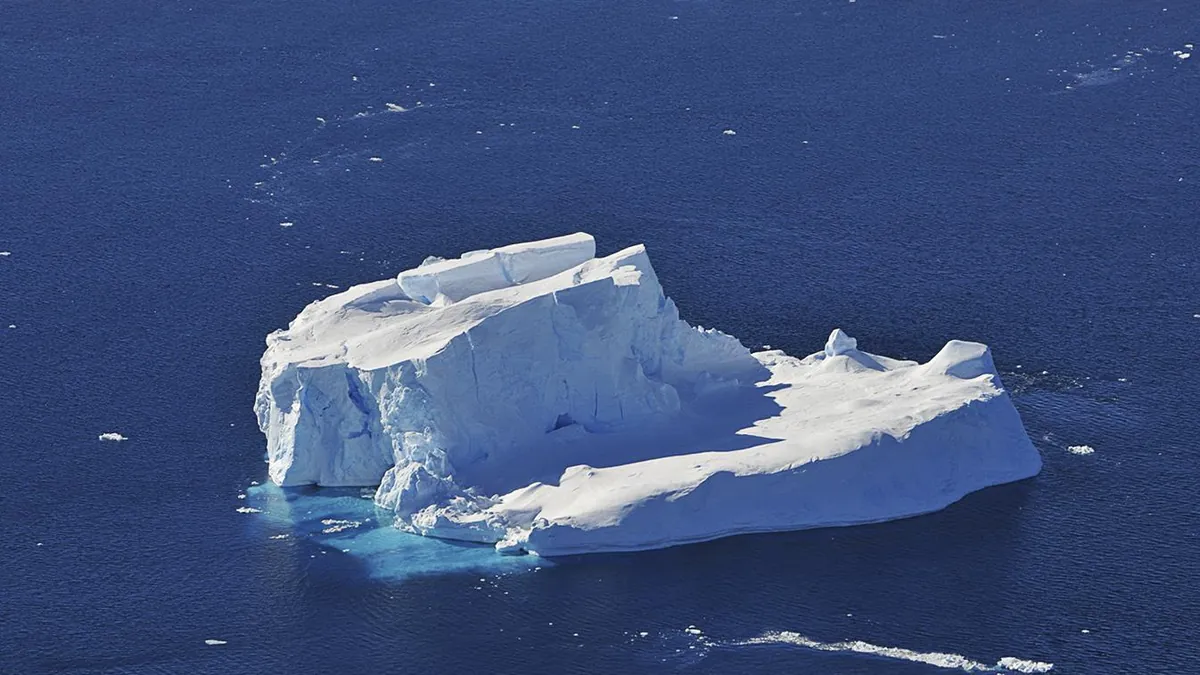
Symbolic image · Photo: NASA/Jane Peterson / Wikimedia Commons, Public domain (cropped and resized)
One of the largest water masses in the Southern Hemisphere has reversed its long-term trend, researchers from the University of Melbourne, the Indian Institute of Science (IISc) and the University of Southampton report in Nature Climate Change, published on Oct. 28. Antarctic Intermediate Water (AAIW) lies at depths of roughly 500 to 1,500 meters and forms part of the upper limb of the global overturning circulation. Between 1995 and 2015, meltwater from seasonal sea ice kept the layer relatively fresh and stable; from 2016 to 2024 it became saltier, denser and sank deeper. The authors say this is the first direct observational evidence of such a reversal.
The study is based on measurements: data from about 4,000 Argo floats as well as satellite and atmospheric data. Since 2016, Antarctic sea ice has hit record lows. According to the researchers, the summer meltwater volume fell from about three times to about twice the Amazon River's annual flow (roughly 6,600 cubic kilometers). As a second factor, they cite increased upwelling of saltier, warmer deep water. The last comparable shift occurred about 130,000 years ago, at the end of the last interglacial. "That transition took thousands of years, not two decades," co-author Bishakhdatta Gayen said. The press releases give no error margins.
The possible consequences are the researchers' assessment, not measurements. Existing climate models may underestimate deep-ocean warming and therefore misjudge regional sea level rise, the authors write. "A weakened AAIW layer could push more excess heat deeper," said lead author Kaushik Mishra, a PhD student at IISc. Oceanographer Alberto Naveira Garabato of Southampton said a sustained shift could, over years to decades, feed into the Atlantic Meridional Overturning Circulation (AMOC). Ocean carbon storage could also be affected, but the magnitude and timing remain uncertain, the researchers stress.