
Clean water with less chemistry: iron framework uses hydrogen peroxide almost fully
Researchers at Zhejiang University present a catalyst that breaks down pollutants such as bisphenol A and antibiotics using a fraction of the hydrogen peroxide usually needed.
Symbolic image · Photo: Alexisfortini / Wikimedia Commons, CC BY-SA 4.0 (cropped and resized)
In so-called Fenton-like water treatment, iron catalysts split hydrogen peroxide into highly reactive hydroxyl radicals that destroy pollutants. Much of the peroxide is wasted, however, because splitting it takes a lot of energy and the radicals are short-lived. A team at Zhejiang University in Hangzhou presented a new catalyst in Nature Communications on Oct. 26.
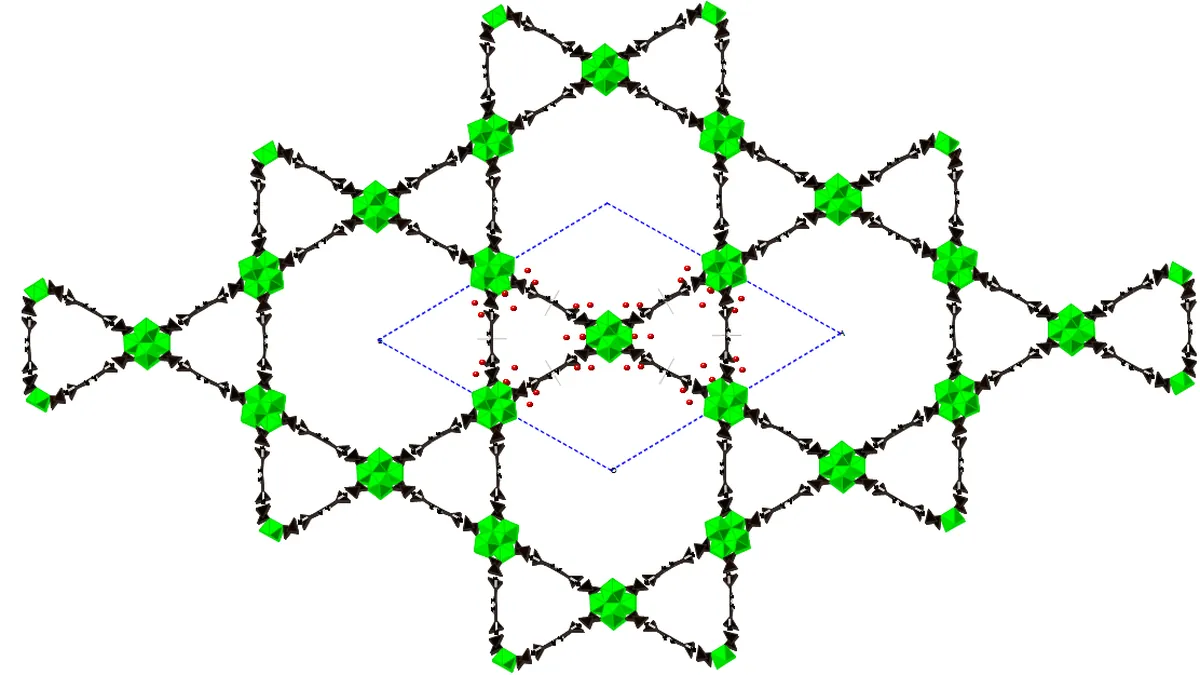
It is an iron-based metal-organic framework called N/MIL-53(Fe) with additional nitrogen sites around the iron centres. These make the peroxide easier to split, and more than 90% of the resulting radicals stay bound to the surface, so they remain usable for longer. According to the authors, about 90% of the hydrogen peroxide is converted.
Even with trace peroxide (0.5 millimoles per litre), degradation reached 98% within five minutes. Tests covered bisphenol A, phenol, p-chlorophenol and the antibiotics tetracycline and ciprofloxacin. The study says peroxide consumption is only 3% to 10% of that of previously reported comparable catalysts.