
Cerrado: Savanna soils store vast carbon, but climate finance overlooks them
Soils in Brazil’s savanna store up to 1,200 tonnes of carbon per hectare, according to a paper in “Plants, People, Planet.” But carbon markets are geared toward forests.
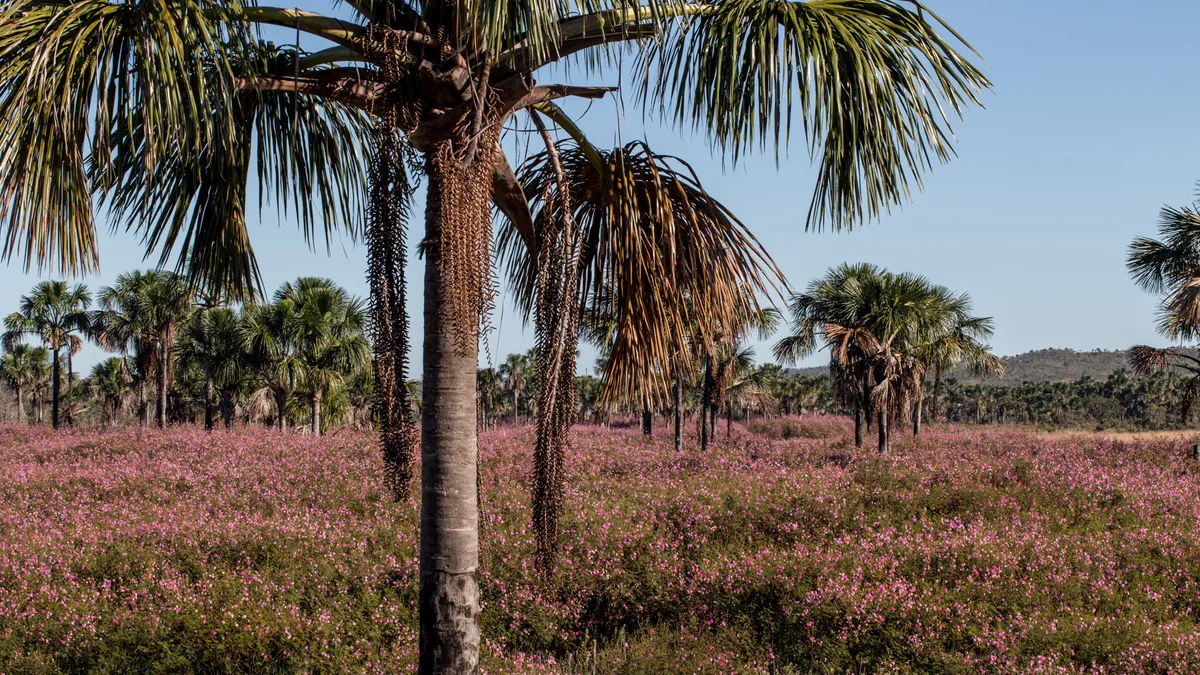
Symbolic image · Photo: Eliane de Castro / Wikimedia Commons, CC BY-SA 4.0 (cropped and resized)
Open ecosystems such as savannas and grasslands largely fall through the cracks of climate finance. That is the conclusion of a policy brief on Brazil’s Cerrado published on Oct. 23, 2026, in the journal “Plants, People, Planet” (Wiley, New Phytologist Foundation). The lead author is Franciele Peixoto of the government of the state of Goiás; contributors include the Cary Institute of Ecosystem Studies (U.S.) and the University of Campinas (UNICAMP). It is an assessment based on the authors’ earlier research, not new measurements; it was first presented at the COP30 climate conference.
According to the paper, Cerrado soils store up to 1,200 tonnes of carbon per hectare, which the authors say is about six times the carbon per hectare held in the vegetation of the Amazon rainforest. Some of it is up to 20,000 years old. The Cerrado also feeds two-thirds of Brazil’s major rivers. More than 46 percent of its original area has already been cleared for cropland and pasture, according to a 2022 study. “All the standards and methodologies for carbon markets are based on forested areas,” Peixoto said. Open ecosystems have therefore so far fallen through the cracks.
The 1,200-tonne figure is a maximum, not an average; the release gives no uncertainty ranges. The authors nonetheless see protecting intact open landscapes as an underestimated lever for climate protection. Plant ecologist Natashi Pilon (UNICAMP) also stressed their importance for water supply. Reshaping a global system that was not designed for open ecosystems will not happen “overnight,” Peixoto said.