
“Battery of the Balkans”: Bulgaria doubles storage to about 6 gigawatts
With 700 million euros in EU funding, Bulgaria has doubled its battery storage within a year. Power exports rose 62%, but in winter conventional generation matters again.
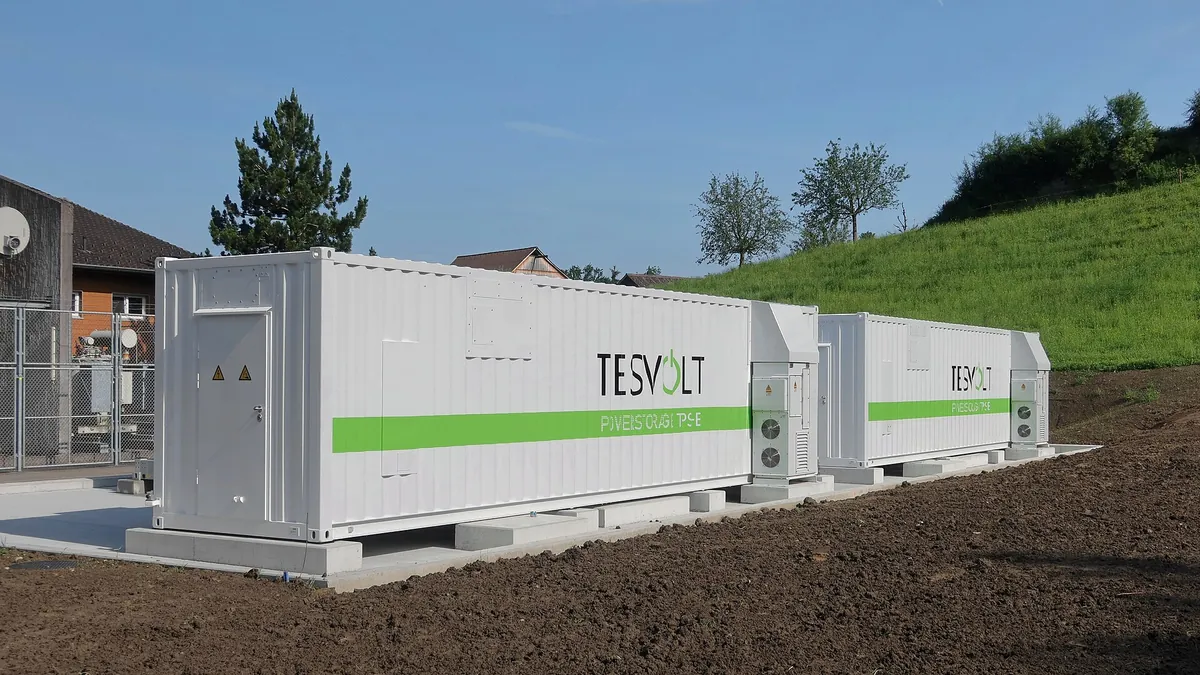
Symbolic image · Photo: Kecko from Eastern Switzerland / Wikimedia Commons, CC BY 2.0 (cropped and resized)
Bulgaria has unexpectedly become a leader in battery storage in Europe. The country doubled its storage capacity within a year from about 3 to around 6 gigawatts, backed by 700 million euros in EU grants, according to a Reuters report. Electricity exports rose 62% to 3.5 terawatt hours. On peak days, up to 50,000 megawatt hours flowed abroad. That equals on average “about 2,000 megawatts flowing out of Bulgaria every hour,” said Dimitar Zarchev of grid operator ESO.
“Battery storage is now crucial. It is not a nice-to-have, it is a must,” said Nikola Gazdov, chairman of the Association for Production, Storage and Trading of Electricity (APSTE). Bulgarian power also went to Romania, where a nuclear reactor was shut down in August because of drought-driven low water levels on the Danube. In neighboring Greece, only about 1 gigawatt of storage is expected to be connected to the grid by the end of the year.
The Energy Ministry in Sofia warns, however, that batteries could eventually “cannibalize part of their revenues” as price differences between day and night narrow. Batteries are also likely to be less important in winter; Zarchev expects Bulgaria to rely more on conventional power plants then.