
Smaller circuits for quantum computers: Google offers $150,000 in prizes
In a Kaggle competition, teams are to shrink quantum circuits for fusion research, optimisation and chemistry, using fewer gates and qubits.
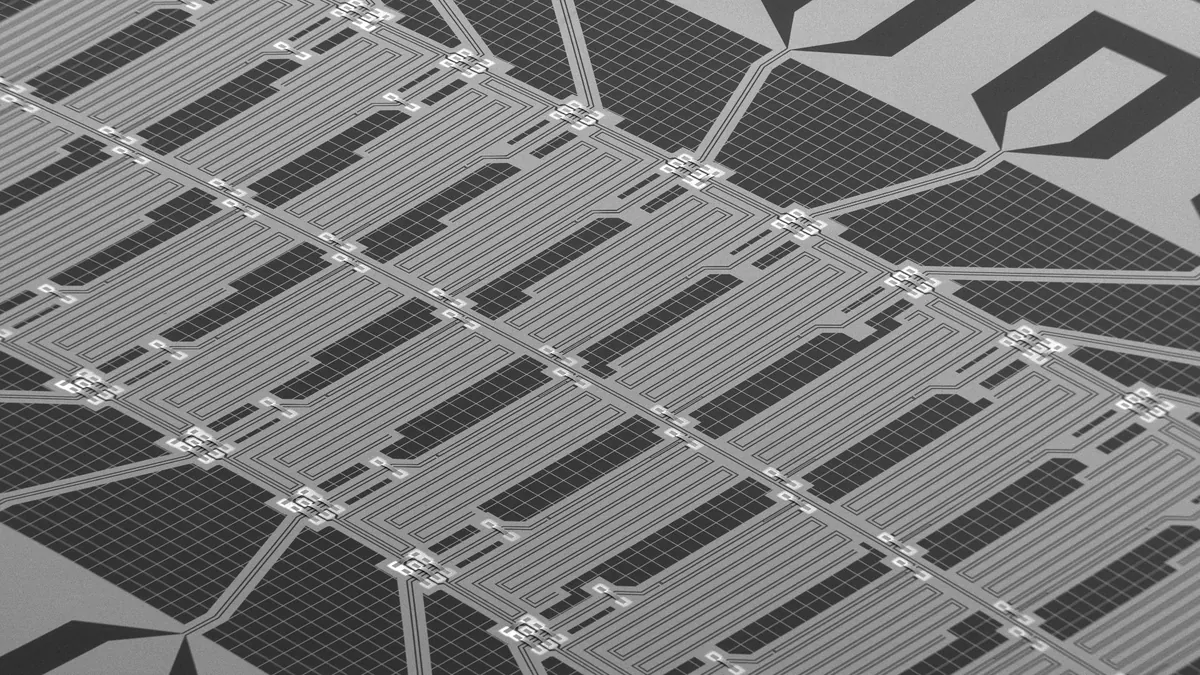
Symbolic image · Photo: FMNLab / Wikimedia Commons, CC BY 4.0 (cropped and resized)
Google's quantum research unit has launched a competition aimed at bringing useful quantum computers within reach sooner. On the Kaggle platform, teams are asked to shrink quantum circuits so they need fewer operations, known as gates, and fewer qubits without losing accuracy. The competition is built around AI systems that propose changes, check them and search for further savings. Google is providing starting circuits, verification programs and its open-source kickmix software, which checks such circuits on conventional computers using randomised testing at what the company says is 60 billion gates per second on a single processor core. That gives high confidence but not an exact proof of correctness.
There are three tasks: a quantum version of the fast inverse square root for plasma simulations in inertial confinement fusion, a circuit for decoding Reed-Solomon codes used in optimisation problems, and a more efficient description of FeMoCo, the iron-molybdenum cofactor at the active site of the enzyme nitrogenase, regarded as a key problem in fertiliser chemistry. A total of $150,000 is on offer, including $50,000 for first place. A mid-competition prize will be awarded on Nov. 20, and the award for the longest-held lead runs until Jan. 4, 2027. Google said its own internal experiments have already produced circuits better than any published so far, The Quantum Insider reported.