
Nature Sustainability: Two-nanometre membrane filters CO2 in the lab
Researchers from Tianjin University and EPFL present a graphene-carbon membrane that separates CO2 from gas mixtures – so far only in the laboratory.
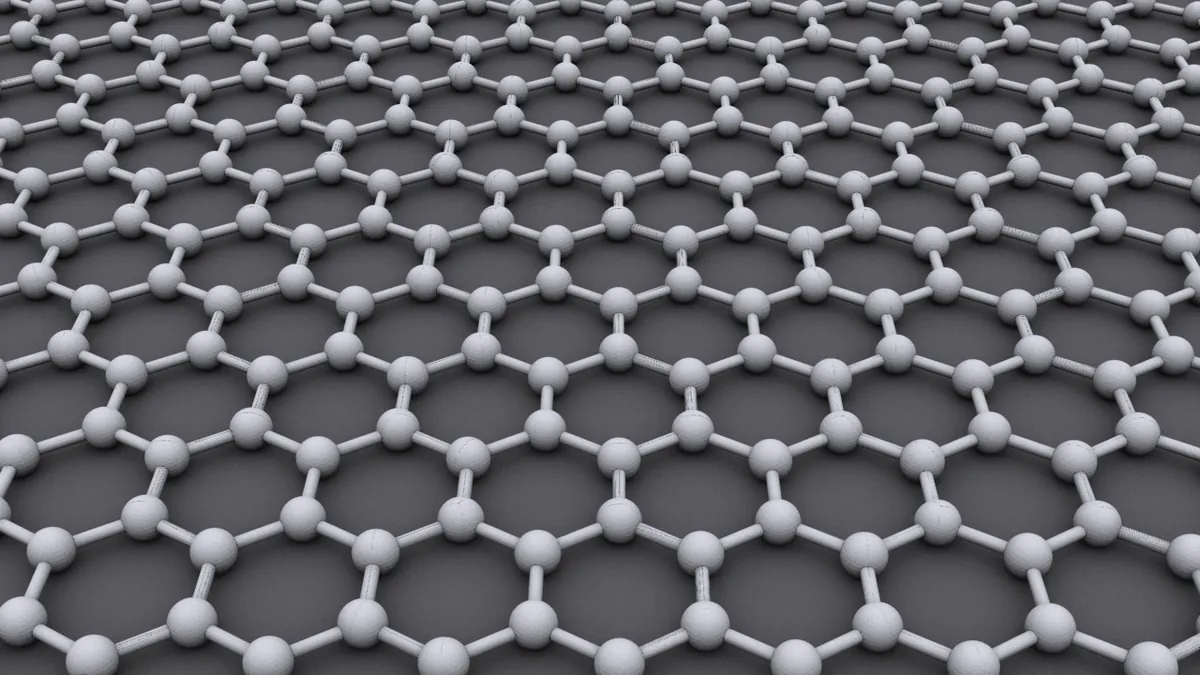
Symbolic image · Photo: AlexanderAlUS / Wikimedia Commons, CC BY-SA 3.0 (cropped and resized)
An ultra-thin membrane made of two carbon layers could make capturing carbon dioxide from exhaust gases more efficient, researchers report in a study published on 23 October in the journal Nature Sustainability. The work is led by a team around Zhongyi Jiang and Guangwei He at the School of Chemical Engineering and Technology of Tianjin University in China, with partners including the Swiss Federal Institute of Technology in Lausanne (EPFL), Nanjing Tech University and Fudan University in Shanghai. For membrane-based carbon capture, the authors say, materials must be molecularly thin, have precise sub-nanometre pores and be mechanically robust at the same time.
The group coated graphene with a smooth carbon layer as thin as two nanometres, made from a polymer. According to the study, the layer reaches a Young's modulus of about 26.8 gigapascals. In measurements, the membrane separated gases sharply: selectivity was above 60 for CO2 over nitrogen, above 70 for hydrogen over CO2 and above 70 for CO2 over methane. CO2 permeance reached up to 5,000 gas permeation units (GPU). These are values measured in the laboratory on the newly developed membrane.
The authors see potential applications in flue gas, in syngas and in natural gas processing. The study's summary contains no industrial-scale trials and no data on costs or durability over long operating periods. Whether and when such membranes can be deployed widely therefore remains open. The authors themselves speak of possible use, not of a market-ready solution. The work is a contribution from basic research on the technology, not evidence of emissions already avoided.