
IAEA chief Grossi: Nuclear power could more than triple by 2060
Addressing the UN General Assembly, Rafael Grossi named electrification and AI data centres as drivers. More than 60 reactors are under construction.
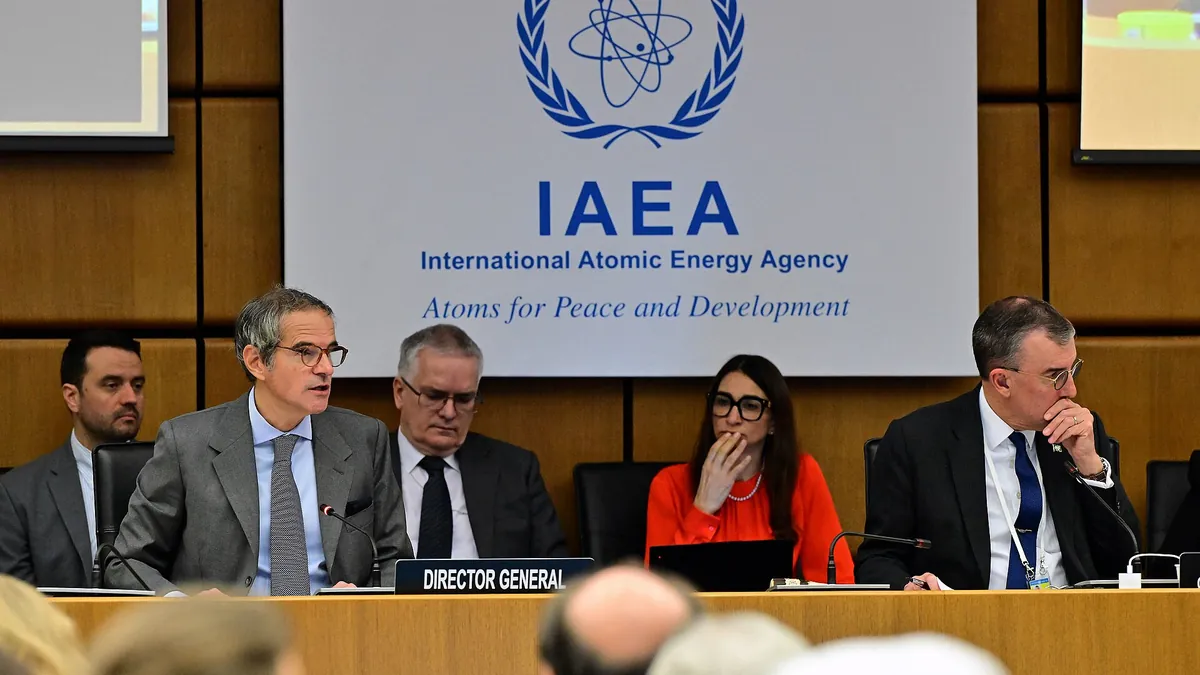
Archive image · Photo: IAEA Imagebank / Wikimedia Commons, CC BY 4.0 (cropped and resized)
The use of nuclear power could more than triple by 2060, according to the International Atomic Energy Agency (IAEA). Director General Rafael Grossi said so on Friday when presenting the agency's annual report to the UN General Assembly, the Associated Press reported. He cited growing electrification, electricity demand from data centres for artificial intelligence and technology companies' appetite for reliable, carbon-free power as drivers. Grossi described nuclear energy as on par with solar and "safer than every other option." The figure is a projection by the agency, whose mandate includes promoting the peaceful use of nuclear energy; the agency reports did not give specific capacity figures for 2060.
According to the figures Grossi cited, more than 400 reactors in over 30 countries supplied around 10 percent of the world's electricity in 2025. That amounts to about a quarter of the world's low-carbon electricity, the IAEA chief said. More than 60 new reactors are currently under construction. Grossi justified the need mainly with rising demand: electrification and the build-out of data centres for AI applications require power that is available around the clock and also climate-friendly.
Grossi also used his address to issue warnings. Ukraine's Zaporizhzhia plant, Europe's largest, remains "in a precarious position," he said, with frequent power losses and only limited diesel reserves for backup supply. On Iran, he said the technical work for a diplomatic agreement had been done and called for a diplomatic solution with IAEA verification, saying IAEA inspectors must be able to return to the country expeditiously. He also pointed to North Korea's nuclear programme, which is growing without IAEA oversight, and to progress in clarifying past nuclear activities in Syria in cooperation with the interim government.