
Nature Climate Change: Rain band over southern Africa could swing twice as often
Climate models suggest extreme southward swings of the South Indian convergence zone, which can trigger floods, could occur twice as often in the 21st century.
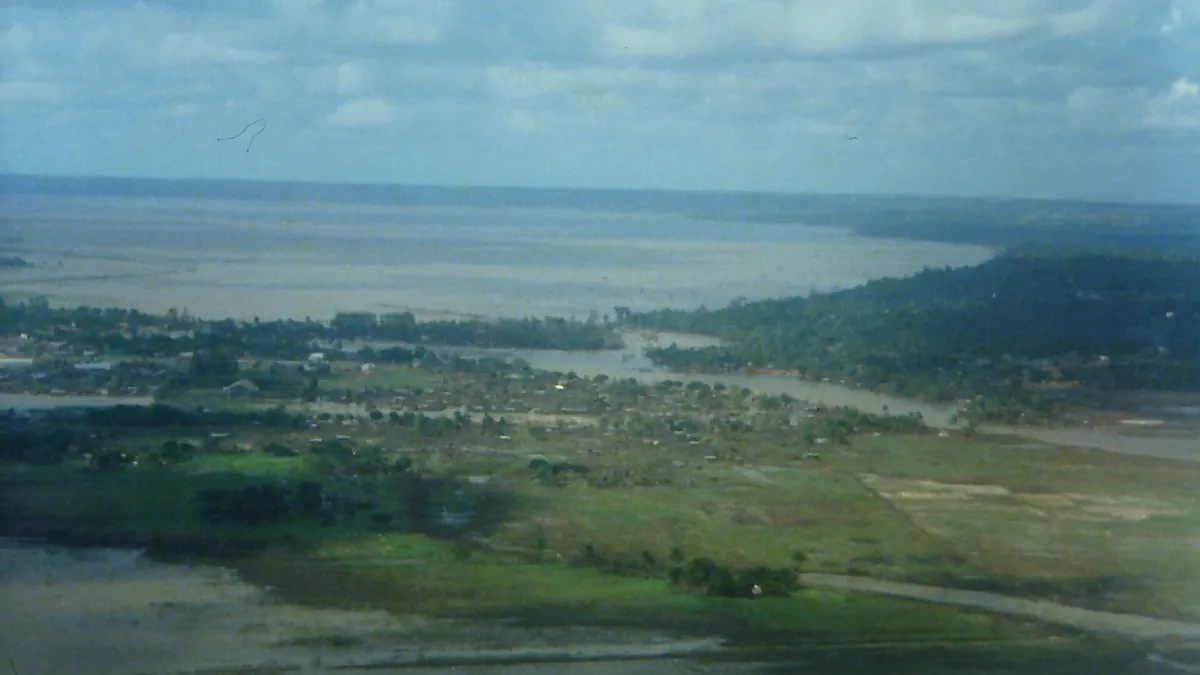
Symbolic image · Photo: krugergirl26 / Wikimedia Commons, CC BY 2.0 (cropped and resized)
Extreme rainfall in southern Africa could become more frequent and more intense as the planet warms, according to a study published on 20 October in the journal Nature Climate Change, which presented it in a Research Briefing on 23 October. The team led by Haodong Wang, Tao Geng and Xiaopei Lin examined the South Indian convergence zone (SICZ); the freely available summary does not say which institution the team belongs to. This large-scale rain band is one of the most important sources of rainfall for southern Africa. When it swings extremely far south, it can trigger devastating floods.
According to the study's climate-model projections, such extreme southward swings could occur about twice as often in the 21st century as in the 20th century. They could also bring more intense rainfall. The authors attribute this to a growing temperature contrast between land and sea and a poleward intensification of the atmospheric circulation. An important caveat: these are model calculations for the future, not changes that have already been measured. The freely available summary gives no uncertainty range for the doubling, nor the number of models or the emissions scenario; the full paper is behind a paywall.
The study adds to a body of work on climate and rainfall in Africa cited in the briefing, including an analysis of flood events on the continent between 1927 and 2020 and earlier model studies of future changes in the convergence zone. What is new is the focus on extremes rather than the average. The results say nothing about individual past floods; that would require dedicated attribution studies. For countries in the region whose agriculture and water supply depend heavily on rain, however, they offer pointers to where flood preparedness could become more important.