
Science study: Warming may have halted the start of a new glaciation
The last remnant of North America's ice sheet had been growing again for 2,000 years until melting set in around 1960, Columbia researchers say.
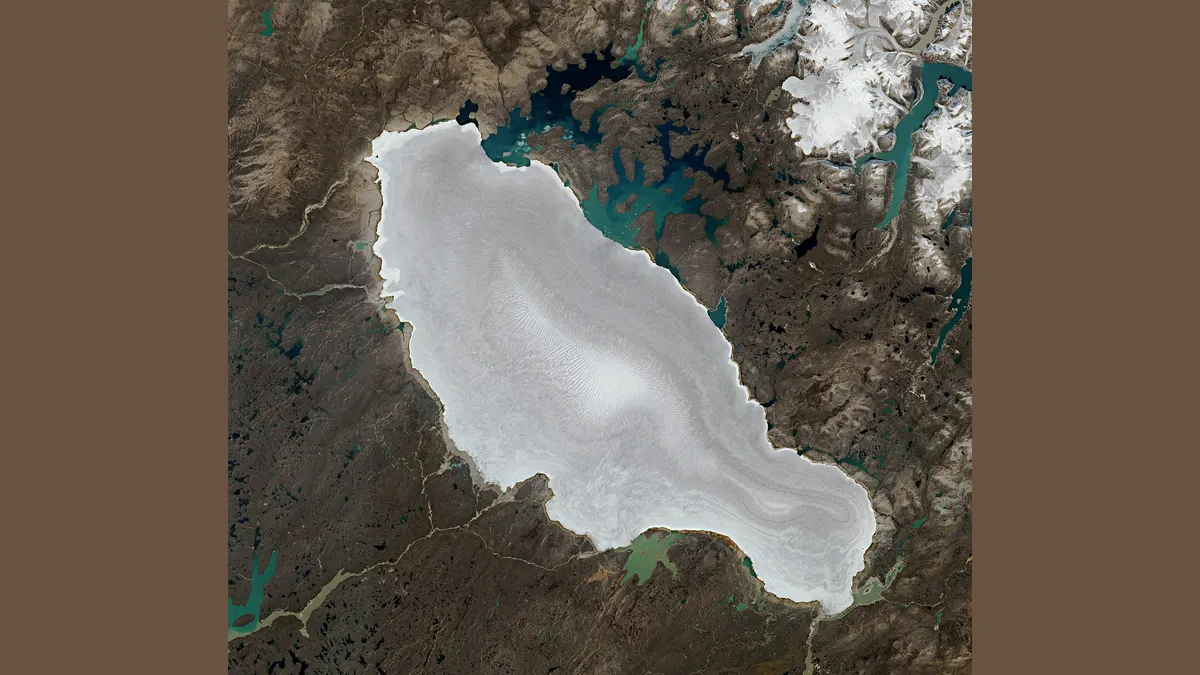
Archive image · Photo: European Space Agency / Wikimedia Commons, Attribution (cropped and resized)
Human-caused warming cut short the beginning of a natural glaciation in North America, the authors of a new study in the journal Science argue. Researchers at Columbia University's Lamont-Doherty Earth Observatory, led by geochemists Nicolás Young and Joerg Schaefer, studied the Barnes Ice Cap on Canada's Baffin Island, the last remnant of the Laurentide Ice Sheet. Between roughly 95,000 and 20,000 years ago, that ice sheet covered much of Canada and the northern United States. The study was published on Oct. 22.
The researchers used radiocarbon dating to measure the age of plant remains exposed by the retreating ice and added data from smaller ice caps that have since melted. They found the ice reached its smallest extent about 3,000 years ago and began growing again about 2,000 years ago. Around 1960 the trend reversed: since then the ice cap has lost more ice in summer than it gains in winter. "It's a very powerful example of how we have jolted the system," Young said.
The interpretation is not settled. According to Columbia, treating the renewed growth of an ice cap as the start of a glacial period challenges prevailing definitions, and earlier model studies put the next glaciation thousands to tens of thousands of years away. The release gives no error margins for the dates. Models project the Barnes Ice Cap will disappear entirely within the next few centuries, a projection rather than a measurement.