
Rescued weather archives: hot days in the Congo Basin have nearly doubled
Researchers led by Vrije Universiteit Brussel digitised thousands of handwritten weather sheets. The measurements show marked warming in the Congo Basin between 1961 and 1990.
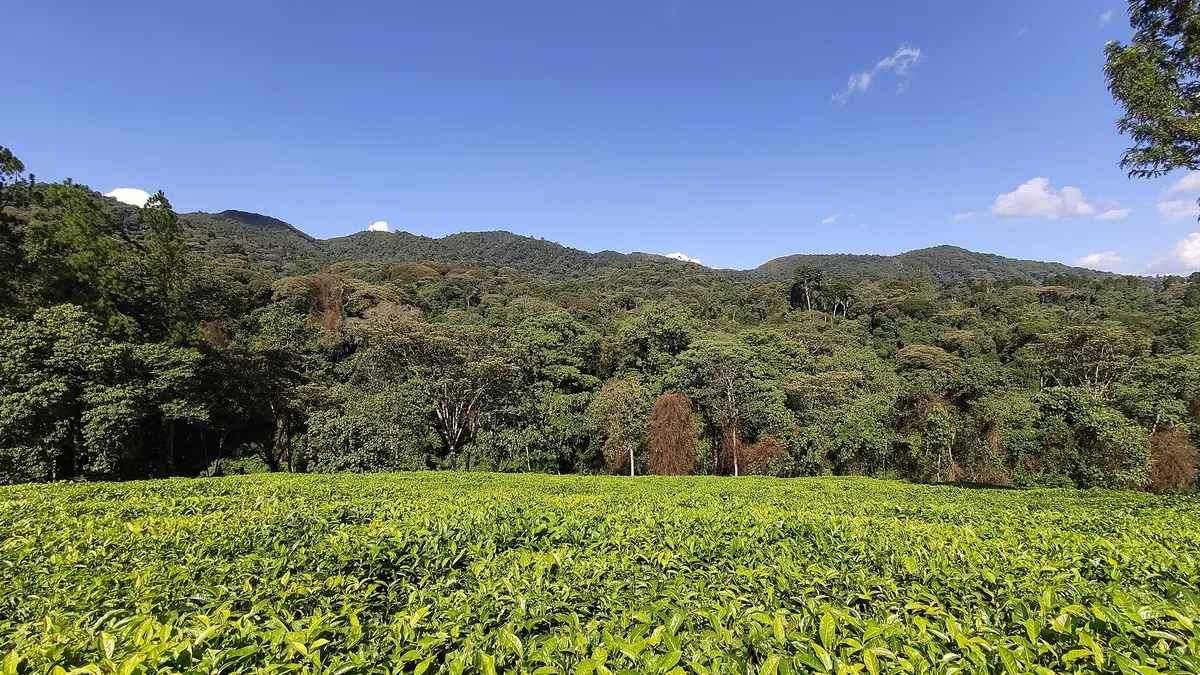
Symbolic image · Photo: PatrickFound / Wikimedia Commons, CC BY-SA 4.0 (cropped and resized)
A team led by Vrije Universiteit Brussel (VUB) presented a new observational record for the Congo Basin in the journal Earth System Dynamics on Oct. 12. It is based on more than 9,000 handwritten monthly sheets from 37 weather stations in the Democratic Republic of Congo. They were photographed during two field campaigns in 2023 in the archives of the agricultural research institute INERA in Yangambi and in the State Archives of Belgium. Software called MeteoSaver, developed by lead author Derrick Muheki, transcribed them automatically into digital spreadsheets, producing a database of more than one million daily observations from 1908 to 2023, most of them from the 1960s to the 1990s.
The measurements show that, as a median across 21 stations with sufficient data, between 1961 and 1990 daily maximum temperatures rose by about 0.7 degrees Celsius, minimum temperatures by about 0.3 degrees and the average by about 0.5 degrees. The number of hot days (maximum above 33.3 degrees) rose on average from about three to about five a year, nearly doubling from the 1960s to the 1980s. At two of three stations examined, heavy rainfall events were roughly twice as frequent in the 1980s as in the 1960s; the authors say three stations are too few to draw conclusions for the whole country. Stations with longer records show that the warming continued into the 2000s. The researchers attribute the fact that most records end around 1990 to the Congo wars.
Context: According to senior author Wim Thiery (VUB), Central Africa is one of the few regions where the latest report of the Intergovernmental Panel on Climate Change (IPCC) could not confirm an increase in hot extremes because of a lack of observations. The new, publicly available dataset is intended to help close that gap and to test climate models for the region. The study documents measured changes; it does not contain a formal attribution of causes, although VUB links the rise in extremes to warming from fossil fuel emissions in its release. Parts of the INERA archive had been damaged by fire shortly before the images were taken.
Sources
- Earth System Dynamics – Muheki et al.: From paper to proof: revealing Congo Basin warming through rescued climate archives (12.10.2026)
- Vrije Universiteit Brussel via EurekAlert – Hot days become twice as common between 1960 and 1990 in the Congo Basin (12.10.2026)
- EGUsphere – Diskussionsfassung der Studie (Preprint, 2026)