
Launch success: NVS-03 in orbit – India's NavIC navigation system has four satellites
A GSLV-F18 rocket placed the satellite into a transfer orbit on Friday evening. NavIC is thus back at the minimum of four satellites needed for standalone positioning.
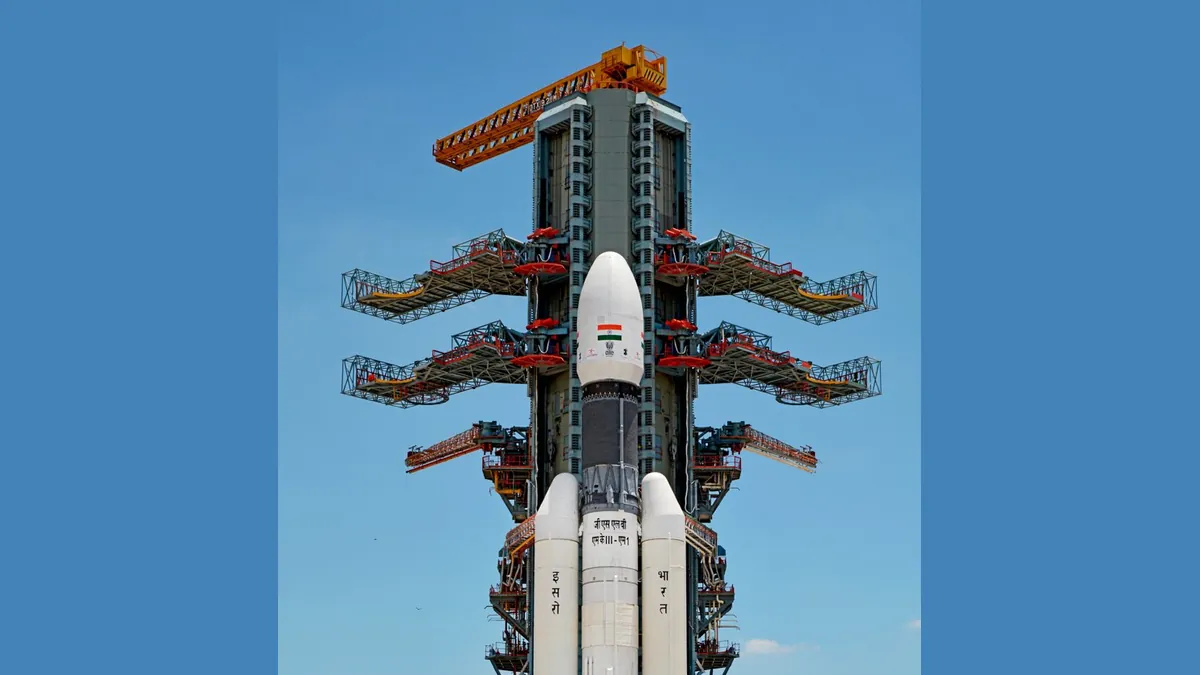
Symbolic image · Photo: ISRO / Wikimedia Commons, CC BY-SA 4.0 (cropped and resized)
India's space agency ISRO has successfully launched the NVS-03 navigation satellite. The roughly 50-meter GSLV-F18 rocket lifted off on Friday, Oct. 30, at 11:51 p.m. India time (19:21 CET) from the second launch pad of the Satish Dhawan Space Centre in Sriharikota. After about 18 minutes, the satellite separated from the rocket and reached a geosynchronous transfer orbit with a perigee of 170 kilometers and an apogee of 37,023 kilometers. Using its own propulsion, it will now head for its final slot at 32.5 degrees east.
NVS-03 belongs to the next-generation NVS series of NavIC, India's regional navigation system. The satellite carries atomic clocks, including a rubidium clock, and transmits in the L1, L5 and S bands – the L1 signal is new for NavIC. With the newcomer, the system again has four working satellites, the minimum required for standalone positioning. The signals are to be used, among other things, for real-time tracking of trains, vehicles and ships.
ISRO chief V. Narayanan called NavIC a "strategic national asset". Only 56 days separated two GSLV missions this time – according to him the shortest turnaround yet. Reports put the satellite's mass at between 2,232 and 2,250 kilograms.