
EU-Canada summit: Von der Leyen sticks to "associate membership" despite Merz
Merz had made sure the term was kept out of the summit declaration. Von der Leyen nevertheless discussed it with Prime Minister Carney in Montreal.
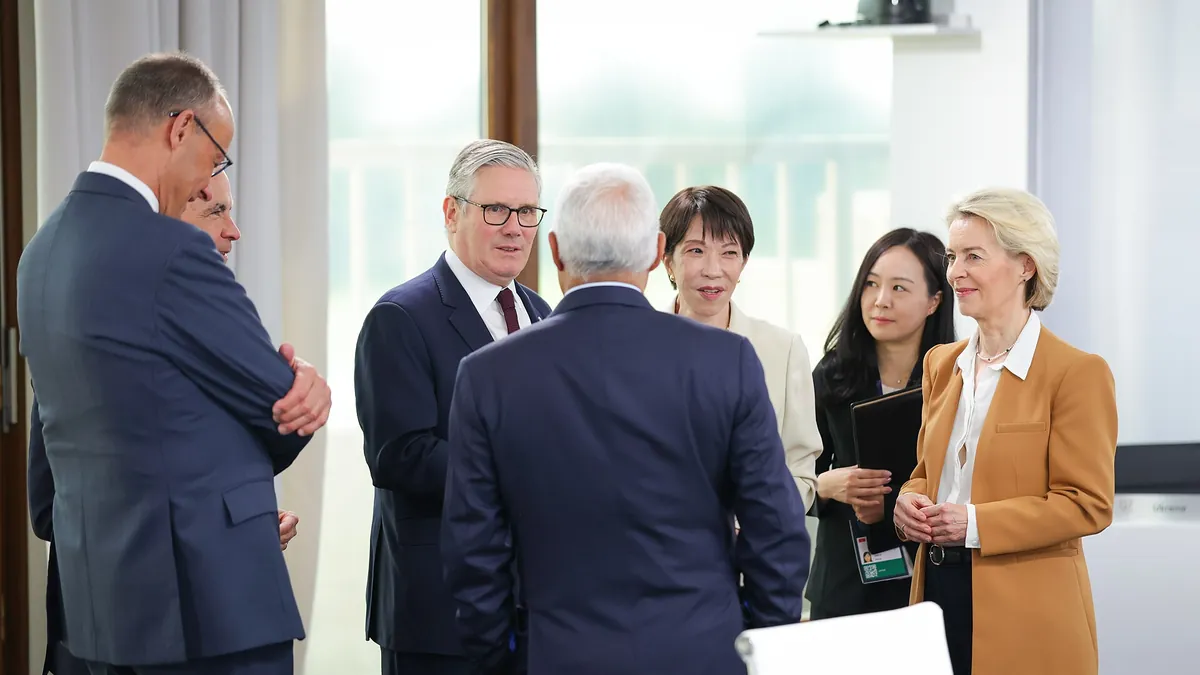
Archive image · Photo: Europäische Kommission - Audiovisueller Dienst, CE - Service audiovisuel, EC - Audiovisual Service, Dati Bendo / Wikimedia Commons, CC BY 4.0 (cropped and resized)
At the EU-Canada summit in Montreal, Commission President Ursula von der Leyen again pushed for closer ties between Canada and the European Union. At the closing press conference, she said she had discussed the term "associate member" with Prime Minister Mark Carney. Chancellor Friedrich Merz (CDU) had previously ensured, together with other EU states, that such terms were not included in the summit declaration.
According to EU diplomats, Berlin cited, among other things, the concept's unclear design and a lack of coordination with member states. Merz himself has used the term since the spring – for Ukraine, as an interim step before EU accession. Von der Leyen wants to use it for close partners on other continents. "A country outside Europe cannot join the European Union," she said, without directly addressing the German resistance.
The declaration now refers to an "Alliance for the Future" – a broader grouping of like-minded countries for economic security and supply chains. "With the Alliance for the Future, Canada and the European Union are moving closer together in a unique way," Merz said in a written statement.