
Rare earths from wastewater: Rice team turns Nobel-winning material into a filter
A modified metal-organic framework captures neodymium, gadolinium and dysprosium from industrial wastewater – for neodymium and gadolinium with at least twice the capacity previously reported for the same material.
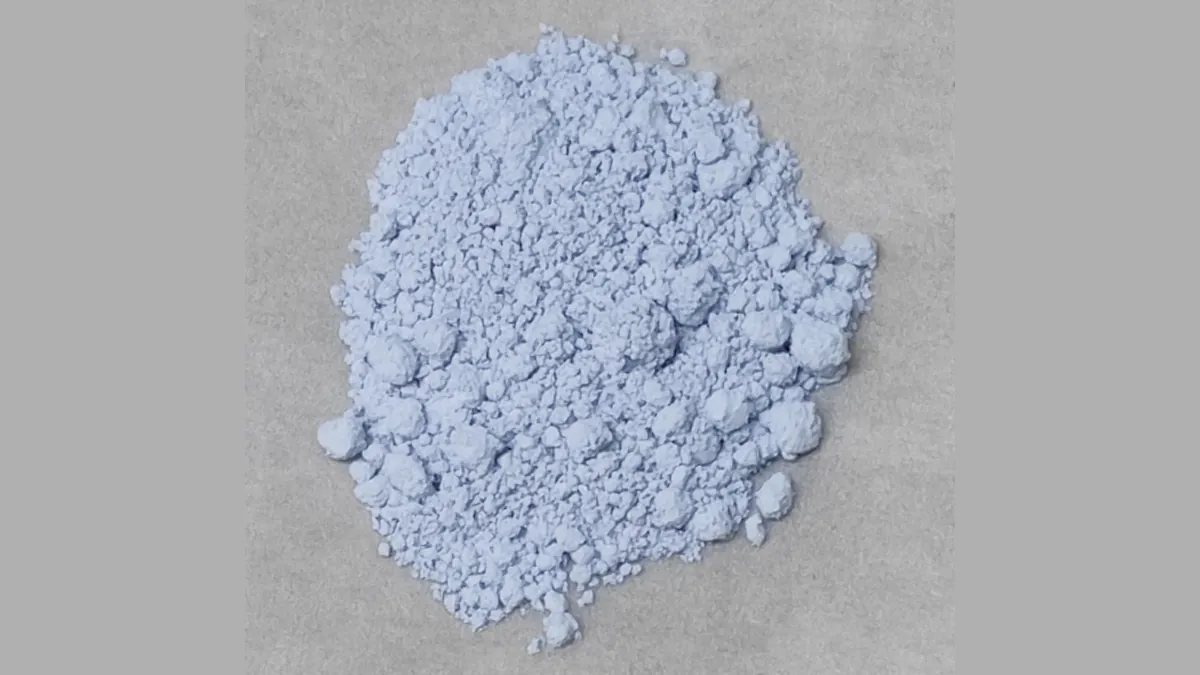
Symbolic image · Photo: Leiem / Wikimedia Commons, CC BY-SA 4.0 (cropped and resized)
Researchers at Rice University in Houston have modified a metal-organic framework (MOF) so that it can capture rare earth metals from industrial wastewater. The development of such framework materials won the 2025 Nobel Prize in Chemistry. The team led by Qilin Li used the highly porous material MIL-101 and added the molecule PMIDA. The study appeared in ACS Applied Materials & Interfaces; the university reported on it on 21 October.
At the highest PMIDA loading, the material took up to 160 milligrams of neodymium, 175 milligrams of gadolinium and 195 milligrams of dysprosium per gram. For neodymium and gadolinium, Rice says this is at least twice what had previously been reported for the same framework under similar conditions. Even with iron present at a hundred times the concentration, uptake fell by only about 0.3 percent in one test.
Dilute hydrochloric acid released most of the captured metals, so the material could be reused. Rare earths are used, for example, in magnets, wind turbines, electric vehicles and MRI machines. "Rare earth elements are essential to many of the technologies we rely on," says Li.