
Releasing the brake on bone building: Ulm team finds new approach against osteoporosis
The protein Axl slows bone formation. When it is blocked with the compound BGB324, mice build significantly more bone mass, researchers at Ulm University report.
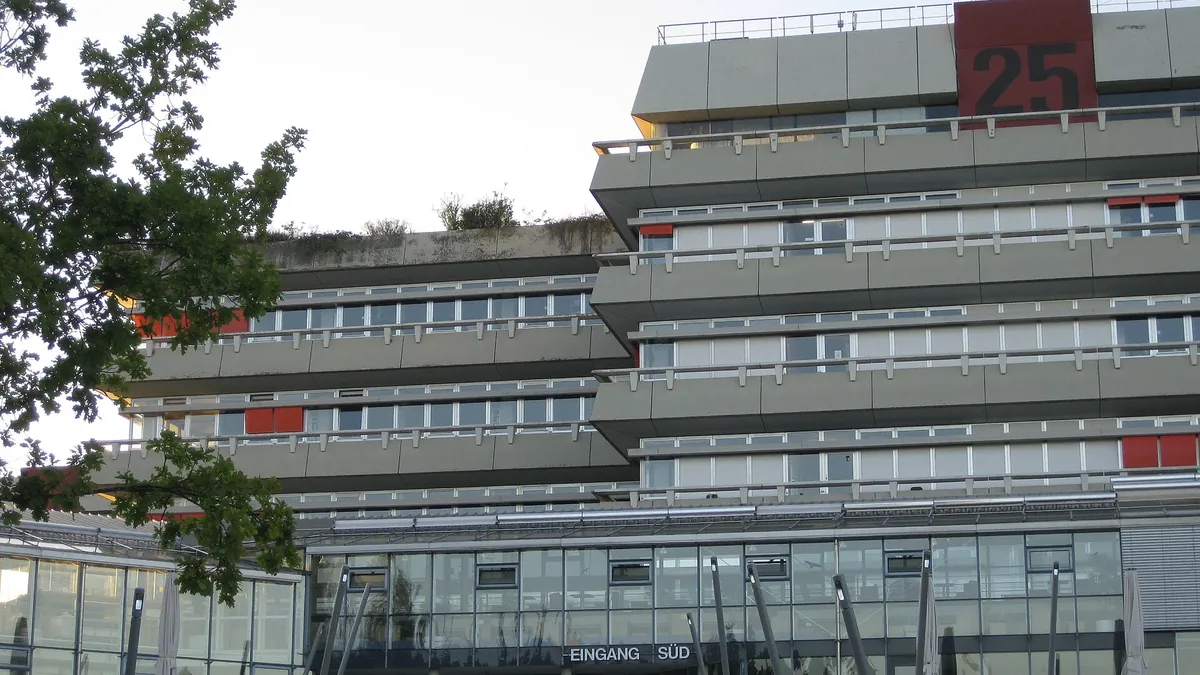
Archive image · Photo: Ralph.schneider / Wikimedia Commons, CC BY-SA 3.0 (cropped and resized)
Researchers at Ulm University in Germany have found a possible new target for osteoporosis drugs. Their work shows that the protein molecule Axl – a so-called receptor tyrosine kinase – inhibits bone formation. When Axl is blocked, bone cells produce significantly more bone substance. The study was published in the journal Bone Research (DOI 10.1038/s41413-026-00554-0); the university announced it on 16 October.
In the lab, blocking Axl made a gene more active that promotes the development of bone cells via a signalling pathway. Mice that received the compound BGB324 for two to four weeks then had significantly more bone mass in their thigh bones and vertebrae. Apart from a slight, harmless drop in white blood cells, no apparent harmful effects were observed. The compound was provided by the Norwegian company BerGenBio.
"Our results show for the first time that the protein molecule Axl puts the brakes on bone formation," said study leader Jan Tuckermann, head of the Institute of Molecular Endocrinology and Physiology. The work was co-led by Anita Ignatius of the Institute of Trauma Research and Biomechanics, with Mubashir Ahmad as first author. So far the results come from lab and animal studies; whether the approach works in humans remains open.