
K+S salt wastewater: Thuringia proposes disused Bischofferode mine as a solution
Thuringia's environment minister Kummer wants to store more than 300,000 cubic metres of potash wastewater in an old mine. Greens protest on the Werra against further discharges.
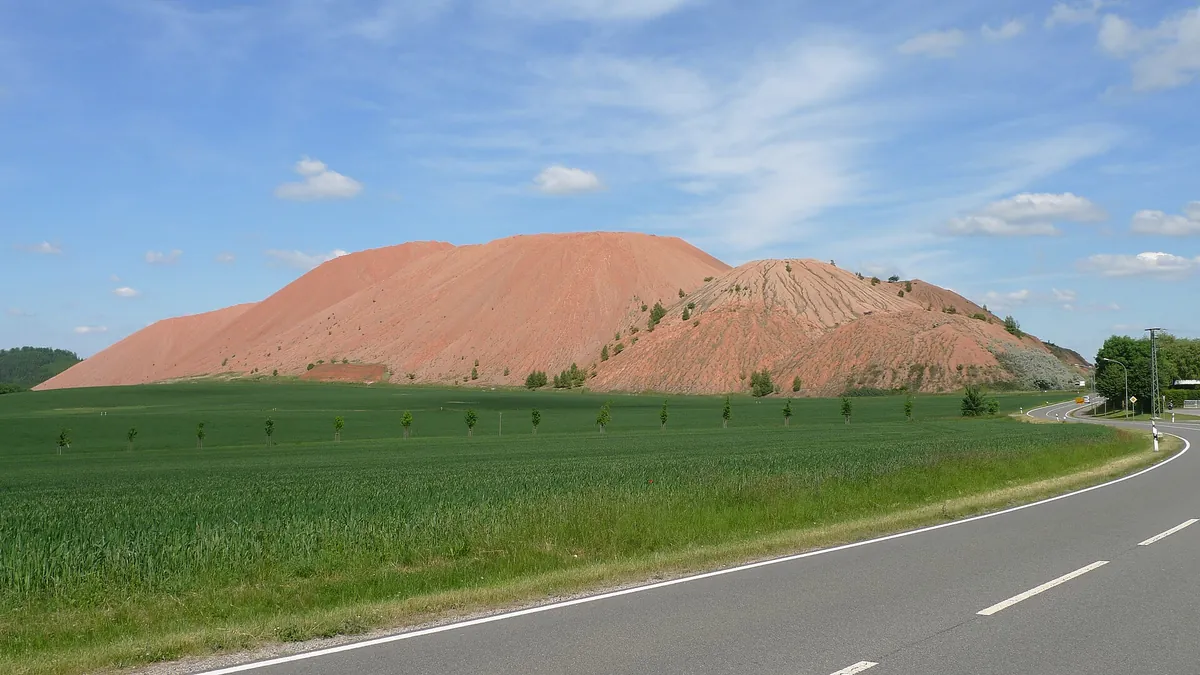
Archive image · Photo: Kassandro / Wikimedia Commons, CC BY-SA 3.0 (cropped and resized)
In the dispute over salty wastewater from fertiliser maker K+S, Thuringia's Environment Minister Tilo Kummer has proposed the Bischofferode potash mine in the north of the state, closed since the early 1990s, as a solution. If the federally owned mine remediation company LMBV agrees, more than 300,000 cubic metres of production wastewater could be disposed of this way, he said. Low-salt water from spoil heaps would be mixed with highly concentrated brine from the Werra mining area and injected into the mine.
At issue is the water-law permit for discharging salty wastewater into the Werra beyond 2027. The Weser river basin community meets in December; at expert level, most states favour a strictly limited transition of one to at most two years, dpa reported. "I am sure we will find a sensible way to reconcile ecology and economy," Kummer said. Earlier plans to store brine in the Springen mine failed over geological conditions and safety concerns.
K+S says it is investing around 600 million euros in switching to dry processing, due to be completed in 2028; its Werra plant employs about 4,700 people in Hesse and Thuringia. Green politicians from Hesse, Lower Saxony, Thuringia and North Rhine-Westphalia protested in Witzenhausen on Sunday and demanded an end to the discharges.