
Nature Geoscience: Arctic could lose more winter sea ice than thought
Climate data from 6,000 years ago show many models overestimate winter sea ice. Weighted projections come out about 1 million square kilometers lower.
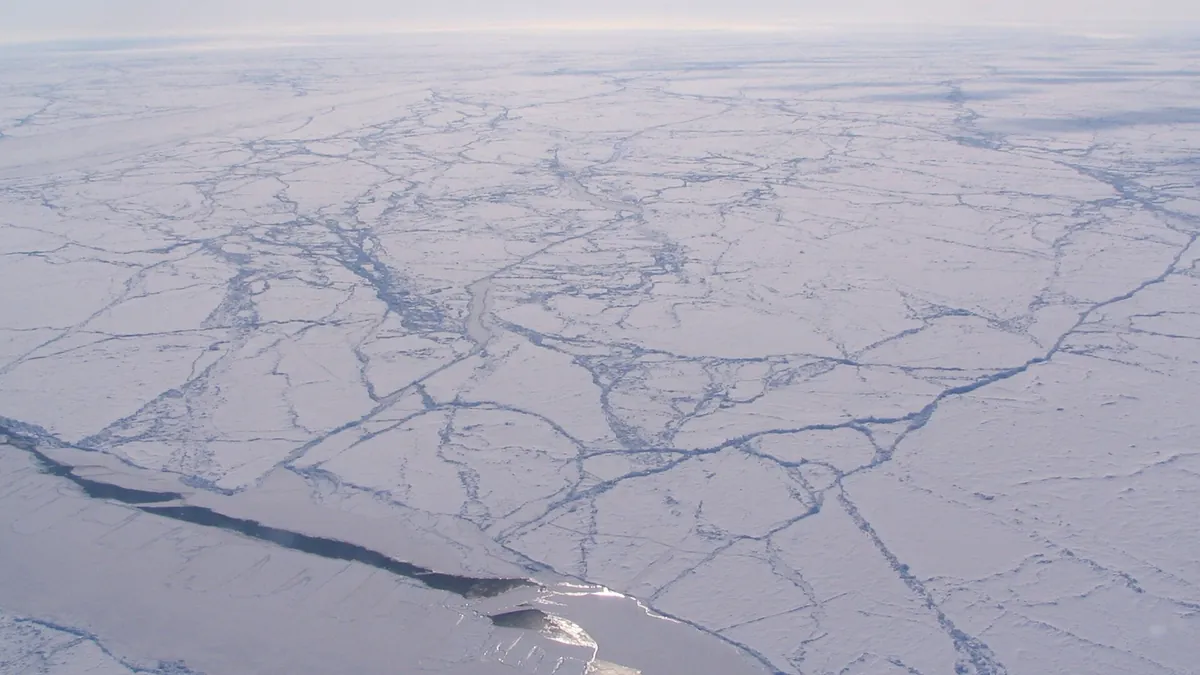
Symbolic image · Photo: NASA/Sinead Farrell / Wikimedia Commons, Public domain (cropped and resized)
Climate models may underestimate how much Arctic sea ice shrinks in winter. That is the conclusion of a study published Oct. 16 in Nature Geoscience, led by Crystal Fu of the Scott Polar Research Institute at the University of Cambridge together with Matthew Osman and Marco Aquino-López of the Mexican research center CIMAT. The team compared 27 climate models with reconstructions of the mid-Holocene about 6,000 years ago, when the Arctic was warmer and carried less ice, partly because of subtle shifts in Earth's orbit.
The study is based on measurements from ocean sediment cores: the biomarker IP25, produced by sea ice algae, along with complementary biomarkers from open-water organisms. According to the university, it is the largest IP25 database to date. Using a Bayesian method, each model was weighted by how well it matched conditions at the time. When applied to historical simulations, the models' tendency to show too much winter ice disappeared. "We completely removed the positive bias," Fu said.
According to the weighted projections, winter sea ice is likely to shrink by about 1 million square kilometers more than previously assumed; the uncertainty range of the projections narrows by up to 85%. The press release does not give specific uncertainty ranges, a time frame or an emissions scenario. It remains a model projection based on past data. As a preliminary indication rather than an established finding, the team says snowfall over southeastern Greenland and rainfall in the Mediterranean may be underestimated. In March 2025, Arctic ice hit a record low winter maximum, a record that was matched in 2026.