
Roman telescope delivers images nearly 30% sharper than predicted
After tiny corrections to its mirrors, NASA’s new Roman space telescope is clearly exceeding its requirements. The secondary mirror only had to be moved by a fraction of a hair’s width.
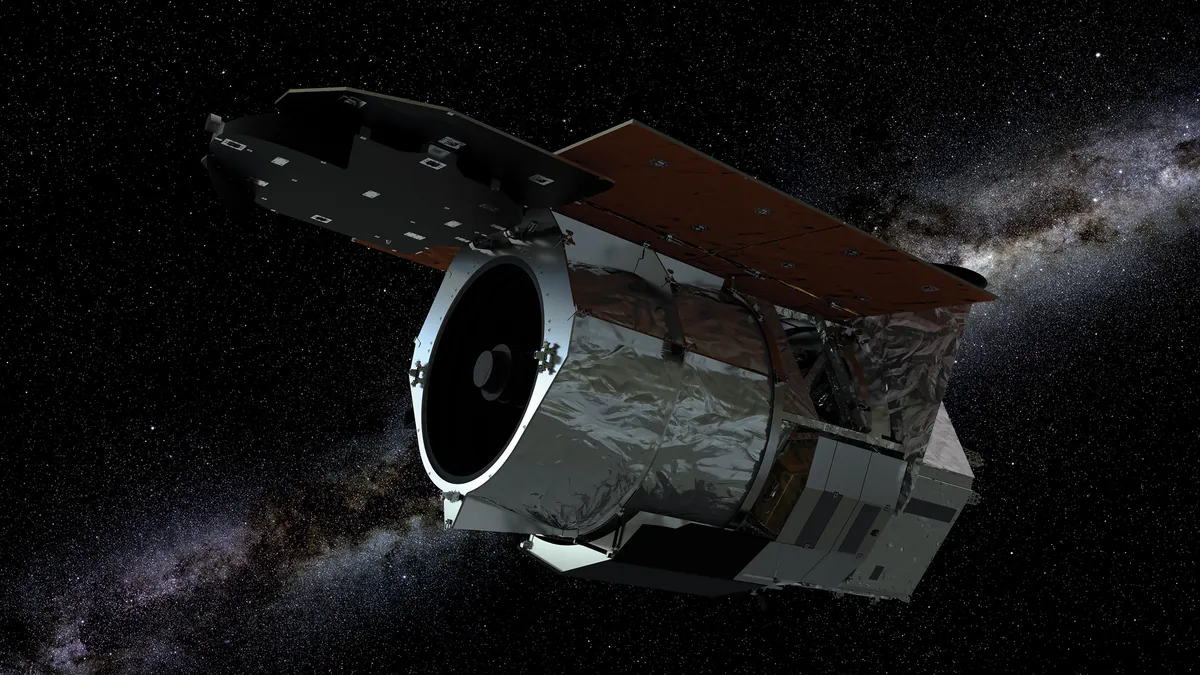
Symbolic image · Photo: IMAGE: NASA, NASA-GSFC / Wikimedia Commons, Public domain (cropped and resized)
NASA’s Nancy Grace Roman Space Telescope, launched in the summer, is performing better than required before launch. According to the U.S. space agency, the main instrument, the Wide Field Instrument camera, is delivering images almost 30 percent sharper than predicted. The requirement was an optical error of about 90 nanometers (RMS); after the latest corrections, 63 nanometers were measured. According to NASA, 90 nanometers is about one-thousandth the thickness of a human hair. Roman launched on Aug. 30, 2026, and is to study dark matter and dark energy, among other things.
The camera was switched on in September. Engineers tested the 18 detectors and their electronics, the filter wheel, internal calibration LEDs and the temperature control. They then moved the alignment mechanism from its deliberately defocused launch position into the position for the sharpest images. Because the optics were already very well aligned, only tiny adjustments were needed: The secondary mirror was moved by about one-sixteenth of the diameter of a hair. “The telescope’s performance was already excellent before we started the alignment,” said Matthew Bolcar, Roman optical systems lead at Goddard Space Flight Center.
The second instrument, the coronagraph, was also slightly out of focus – less than feared – and was corrected. In the coming weeks, teams plan to fine-tune its camera settings and deformable mirrors and test how well it blocks interfering starlight. “All images from Roman’s cosmic surveys will be even sharper than expected,” said optical engineer Alden Jurling. According to NASA, the companies involved in building it included L3Harris and BAE Space and Mission Systems.