
Balloon instead of stent: Drug-coated balloons perform similarly well
An analysis of 10 studies with 7,832 patients finds no relevant difference between drug-coated balloons and stents in heart attacks and cardiac death.
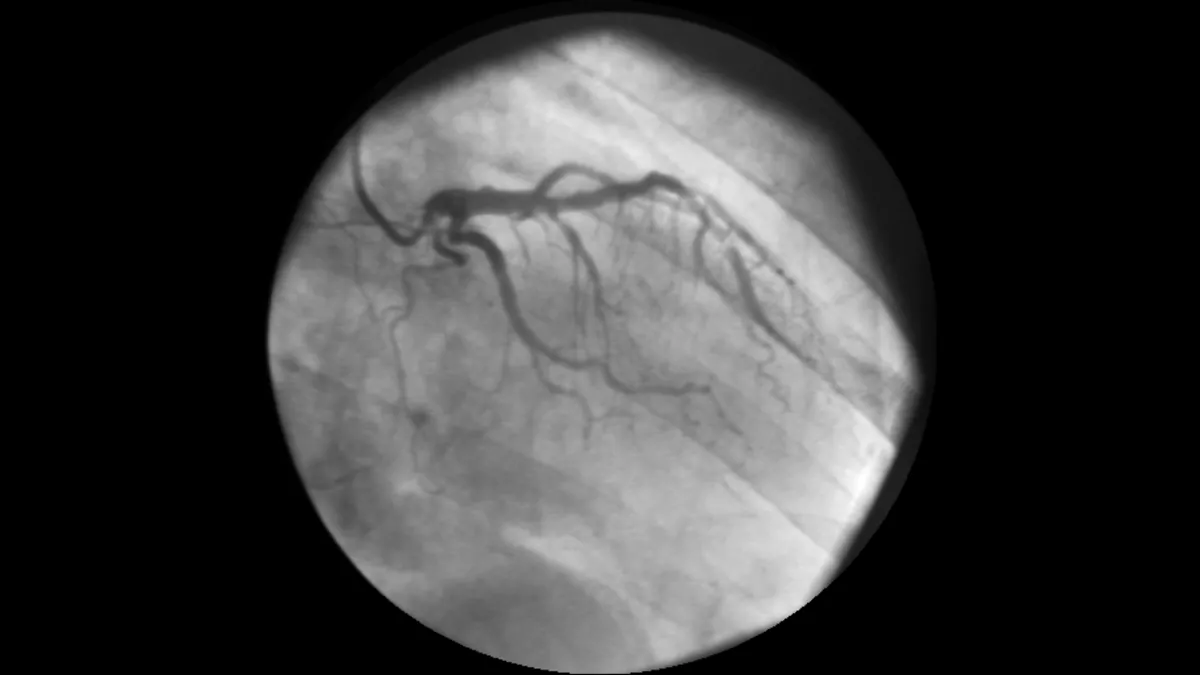
Symbolic image · Photo: Suyash Dwivedi / Wikimedia Commons, CC BY-SA 4.0 (cropped and resized)
For narrowed coronary arteries, doctors usually insert a drug-coated stent – a small metal mesh that remains permanently in the vessel. An alternative is a drug-coated balloon: it is inflated in the narrowed section, releases an active substance into the vessel wall there and is then removed, leaving no implant behind. Researchers at the University of East Anglia have now compared the two procedures in a meta-analysis published in the journal eClinicalMedicine, part of the Lancet family.
According to the authors, 10 randomized trials with a total of 7,832 patients were analyzed, with follow-up ranging from 12 months to five years. For the most serious events – cardiovascular death and heart attack – the team found no meaningful difference. “Our work shows that there was no meaningful difference between these two treatments for the most serious outcomes,” lead author Natasha Corballis said, according to News-Medical.
The researchers see a disadvantage in larger vessels: there, patients treated with balloons more often needed repeat treatment to reopen the artery. However, the authors urge caution because the studies vary widely and the result on repeat procedures depends heavily on a single study. Senior author Vassilios Vassiliou sees the approach as an opportunity to reduce some long-term complications of stents. Larger studies with longer follow-up are needed, he said. The findings are general information; the appropriate treatment is a decision for doctor and patient.
This article is for information only and is not legal, tax, financial or medical advice. Figures as of the date stated.