
Isle of Wight: an unknown predator emerges on England's dinosaur coast
The island off England's south coast is known for chalk cliffs and fossils. Researchers have now described a 120-million-year-old hunter with giant claws.
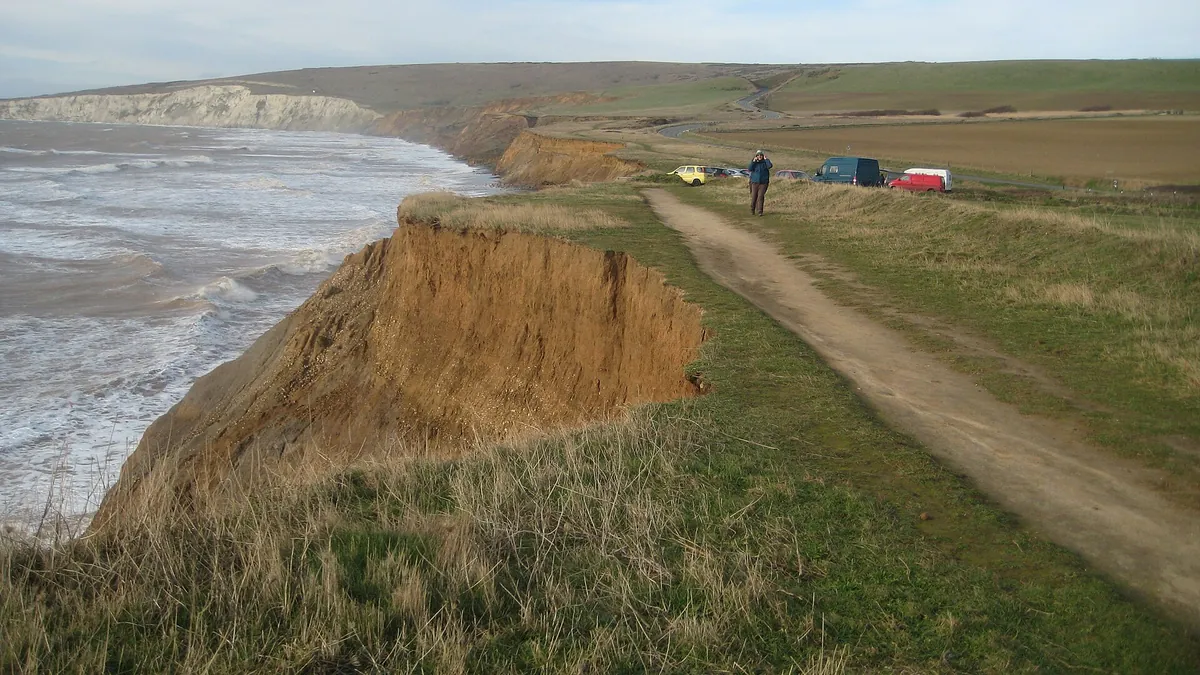
Photo: Andy Roberts / Wikimedia Commons, CC BY 2.0 (cropped and resized)
The Isle of Wight off England's south coast is known for its cliffs, beaches and chalk stacks – and as one of the richest fossil areas in Europe. It has now produced another find: a team led by University College London and the Natural History Museum has described the predatory dinosaur Invictibellatrix amberina, ScienceDaily reported on 14 October. The fossil comes from the base of a cliff on the island's south-west coast. The study was published in the journal Royal Society Open Science.
The dinosaur lived about 120 million years ago in the Early Cretaceous and is the first known megaraptoran in Europe. It was an estimated three to four metres long, just over 1.5 metres tall and may have had claws 10 to 20 centimetres long. "For humans this dinosaur would have been more dangerous than a T. rex," said lead author Cassius Morrison of University College London. The skull fragment was collected by amateur palaeontologist Reginald Walter Tooley; the museum bought it in 1924, but it was only recognised now.
"Despite over 200 years of collecting, the Isle of Wight continues to surprise us with new dinosaur species," said Paul Barrett of the Natural History Museum. The rocks of the south-west coast belong to the Wessex Formation. Visitors to the island find fossil beaches as well as chalk cliffs, dunes and coastal footpaths. When collecting near cliffs, watch out for rockfalls and tides and follow local rules.
This article is for information only and is not legal, tax, financial or medical advice. Figures as of the date stated.