
Antibiotic resistance: US agency CDC lists drug-resistant gonorrhoea as an 'urgent' threat
The CDC's new resistance report names 19 dangerous pathogens. Gonorrhoea bacteria have become resistant to nearly all antibiotics used to treat them, it says.
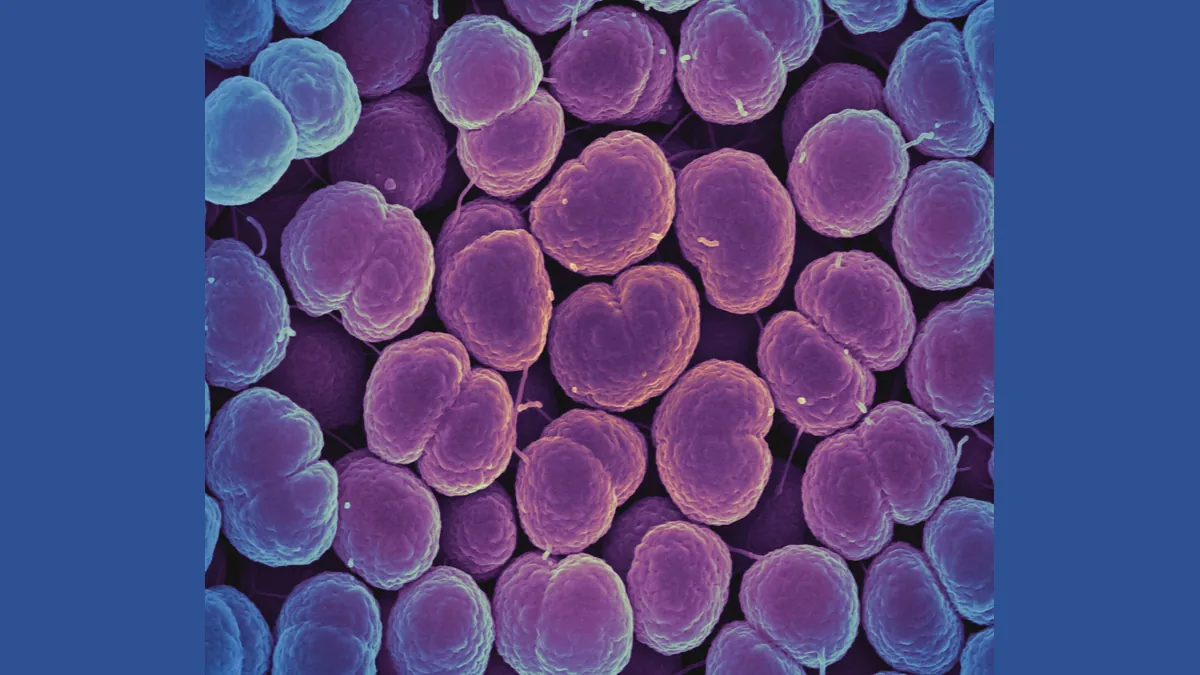
Symbolic image · Photo: NIAID / Wikimedia Commons, CC BY 2.0 (cropped and resized)
The US Centers for Disease Control and Prevention (CDC) released its '2026 Antimicrobial Resistance Threats Report' on 27 October. It describes 19 bacteria and fungi that drugs increasingly fail to stop, plus the gut bacterium C. difficile. Together, according to the CDC, they cause about 9.7 million infections and 50,800 deaths in the US each year. The agency classes the pathogens as four 'urgent', 13 'serious' and two 'concerning' threats, with six more on a watch list.
Drug-resistant gonorrhoea, a sexually transmitted infection caused by the bacterium Neisseria gonorrhoeae, is among the four urgent threats. 'Gonorrhea has developed resistance to nearly all antibiotics used for treatment,' the report says. Urgent threats 'require urgent and aggressive action'. CDC Director Erica Schwartz said antimicrobial resistance threatens modern medicine and puts millions of Americans at risk every year. The available reports on the document give no separate case numbers for resistant gonorrhoea.
Gonorrhoea is also on the rise in Europe: in May the EU health agency ECDC reported a record 106,331 cases for 2024 – 303 percent more than in 2015. Because of high levels of antimicrobial resistance, the ECDC advises against widespread use of doxycycline taken after sex (doxy-PEP) against gonorrhoea. The ECDC advises using condoms with new or multiple partners and getting tested if symptoms appear – a doctor can then give targeted treatment.
This article is for information only and is not legal, tax, financial or medical advice. Figures as of the date stated.