
Germany – Europe's leader in wind power generation
More than 30,000 wind turbines, over 130 TWh of electricity a year and a growing role for renewables in the energy system.
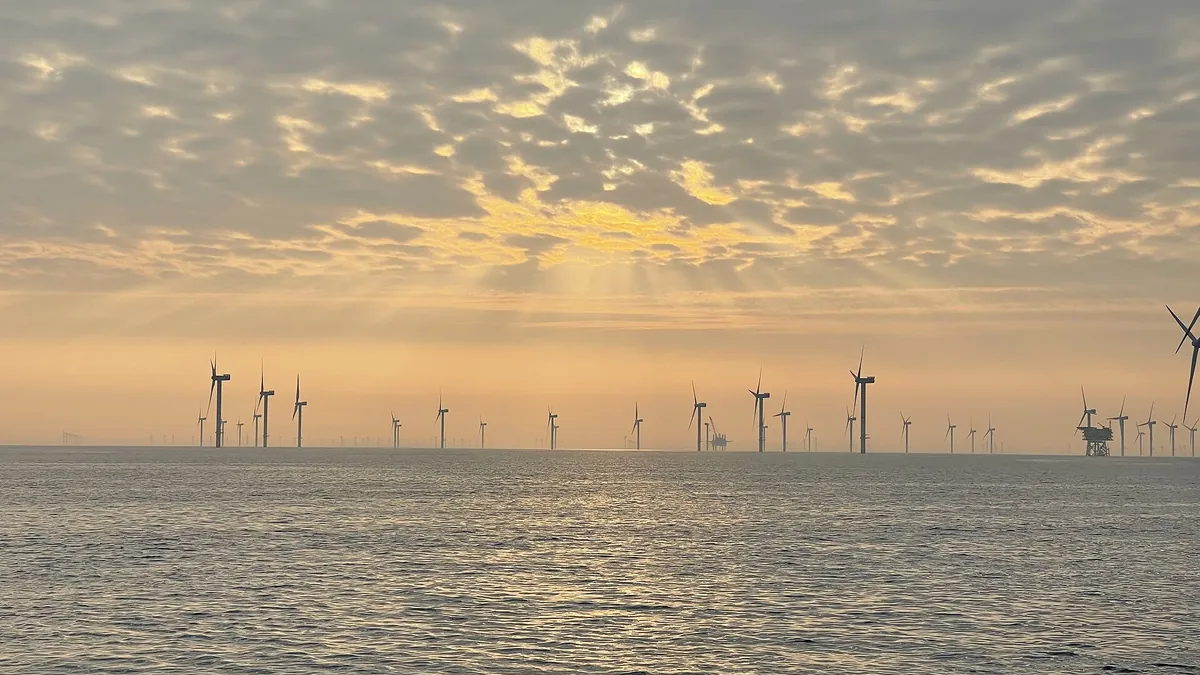
Photo: Capmat007 / Wikimedia Commons, CC BY-SA 4.0 (cropped and resized)
Germany is one of Europe's leading countries in generating electricity from wind. With a large network of onshore and offshore wind farms, the country is turning this natural resource into one of the main pillars of its power system.
In 2025, wind power generation in Germany reaches around 132.6 terawatt hours (TWh). That is more than 132 billion kilowatt hours a year. According to the Federal Statistical Office (Destatis), around 131.3 TWh were fed into the public grid. The difference between the two figures is due to the statistical scope and methods used.
More than 30,000 turbines on land and at sea
The scale of German wind energy is most clearly seen in the number of installed turbines.
At the end of 2025, 29,226 onshore wind turbines are in operation in the country. A further 1,680 offshore turbines are running in the North Sea and the Baltic Sea. This brings the total number of operating turbines to more than 30,900.
The installed capacity of onshore and offshore wind turbines is around 77.8 gigawatts (GW). This figure measures the maximum output of the equipment under certain conditions, not the amount of electricity generated in a year.
Onshore wind farms provide the bulk of generation, while offshore installations are of strategic importance for the sector's long-term development. Winds at sea are often stronger and more constant, creating conditions for high power output.
How much does wind contribute to the power mix?
In 2025, wind energy supplies around 30 per cent of the electricity fed into Germany's public grid. That makes it the country's largest single source of electricity.
This result is the product of decades of investment in new installations, technological development and the expansion of renewable energy.
Generation, however, depends on the weather. Weaker winds can reduce annual output even when installed capacity remains high. Assessing the sector therefore means looking at installed capacity, actual generation and the stability of the power system together.
Wind energy and the international market
Germany is closely linked to the European electricity market and trades power with its neighbours. In 2025 the country exports around 54.3 TWh of electricity, while imports reach about 76.2 TWh.
This means that despite its large renewable output, Germany is a net importer of electricity. Net imports amount to around 21.9 TWh for the year.
Wind energy nevertheless plays a significant role in exports. According to data from the German platform SMARD, onshore wind accounted for 28.7 per cent of the electricity exported by the country in 2025.
This figure shows how important wind energy is for international trade, but it does not mean that Germany exports exactly 28.7 per cent of all the electricity it generates from wind. It refers to onshore wind's share in the composition of exports.
Trade flows change with demand, prices, available generation and conditions in neighbouring power systems. As a result, the country can export electricity in some hours and import it in others.
The challenges facing the sector
The large number of turbines and high installed capacity do not remove the challenges facing the energy system. The transmission grid needs to be expanded so that the electricity generated can reach the regions with the highest consumption.
Another key issue is energy storage and balancing generation when weather conditions change. This requires combining wind energy with other generating capacity, storage systems, flexible demand and better connections to the European power grid.
Developing offshore wind farms also requires substantial investment, specialised infrastructure and long-term planning.
Germany – an example of large-scale wind energy development
The German experience shows how wind energy can become a core component of national power generation. More than 30,000 operating turbines and annual output of more than 130 TWh illustrate the scale of the sector.
At the same time, the trade data show that high renewable output does not automatically mean energy independence. What matters is not only the quantities generated but also when they are generated, storage options, transmission and the overall balance between consumption and available electricity.
Germany remains an important example of wind energy development in Europe, but its results also show how complex the task of building a reliable, competitive and low-carbon power system is.
Sources
- Bundesnetzagentur/SMARD – Daten zum Strommarkt 2025 (05.01.2026)
- pv magazine – Destatis: Stromerzeugung 2025 (06.03.2026)
- FA Wind und Solar / Deutsche WindGuard – Status des Windenergieausbaus an Land 2025
- Deutsche WindGuard – Status des Offshore-Windenergieausbaus 2025
- Fraunhofer ISE – Öffentliche Stromerzeugung 2025
- SMARD – Energiemix von Stromimporten und -exporten (Methodik)