
Blood pressure: skipping pills often erases heart protection, analysis finds
An analysis of nine trials with 91,339 participants found 11% fewer major cardiovascular events only among people who took their medication regularly. Adherence declined over the years.
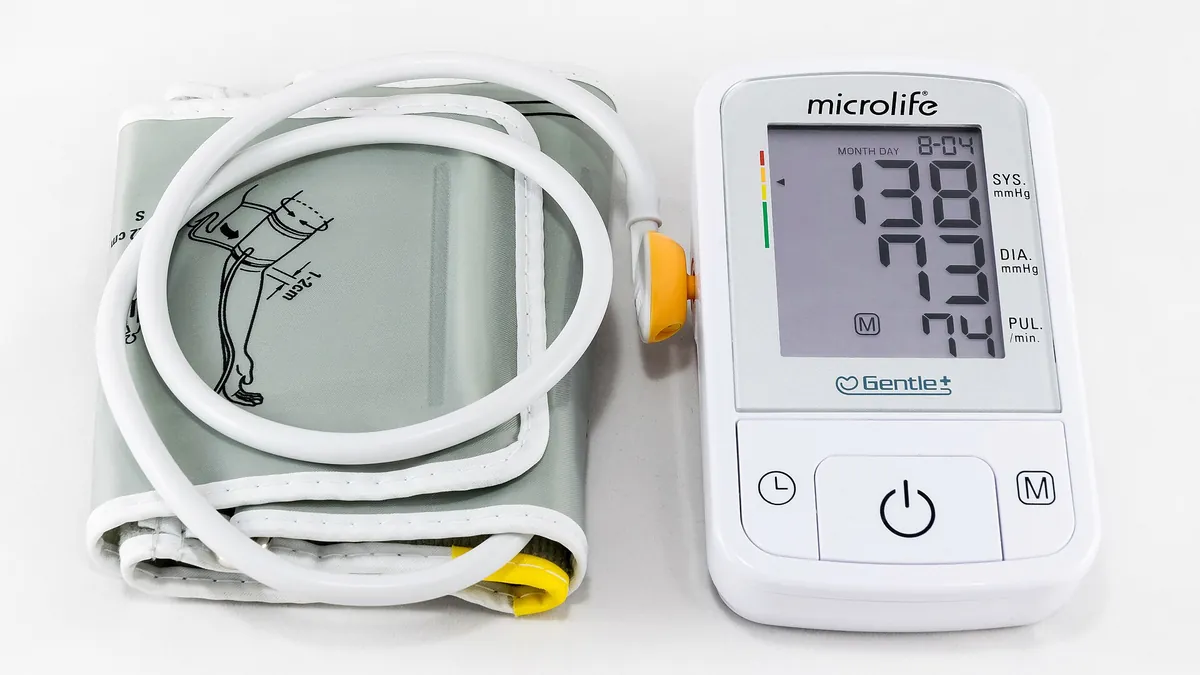
Symbolic image · Photo: Jacek Halicki / Wikimedia Commons, CC BY-SA 4.0 (cropped and resized)
Blood pressure medication appears to protect against stroke and heart attack only when it is taken regularly. That is the finding of an analysis presented by Qianqian Yang of the University of Oxford at the congress of the European Society of Cardiology (ESC), ScienceDaily reported on Oct. 25, 2026, citing the ESC. The researchers examined individual data from 91,339 participants in nine clinical trials that compared blood pressure treatment with a placebo or a less intensive regimen. Participants counted as adherent if they took at least 80% of their prescribed medication.
Among adherent participants, systolic blood pressure fell 5.2 mmHg more in the treatment group than in the comparison group, versus only 3.0 mmHg among less adherent participants. Major cardiovascular events – stroke, heart attack, ischemic heart disease and heart failure leading to hospitalization or death – were 11% less frequent with regular intake; with irregular intake, the team found no statistically significant reduction. Even in the controlled setting of the trials, adherence slipped: 88% met the 80% threshold in the first year, falling to 79% by the fifth. Yang said the results reinforce the old saying that drugs don't work in patients who don't take them.
Worldwide, about 1.4 billion adults aged 30 to 79 have high blood pressure, and roughly half do not take their prescriptions as directed, according to the report. The researchers recommend routinely checking adherence, better patient education, simpler dosing schedules and wider use of single-pill combinations and longer-acting drugs. Felix Mahfoud, chair of the ESC Communication Committee, said non-adherence had been neglected for years as a cause of uncontrolled hypertension. A caveat: the findings were presented at a congress, and the report names no journal publication. Questions about individual treatment should be discussed with a doctor.
This article is for information only and is not legal, tax, financial or medical advice. Figures as of the date stated.