
Driverless bus on demand: TU Graz and Chinese partners develop a round-the-clock shuttle
No timetable, no fixed route: an autonomous electric shuttle for up to 15 people is meant to pick up passengers on request. A test vehicle is already running in traffic in China.
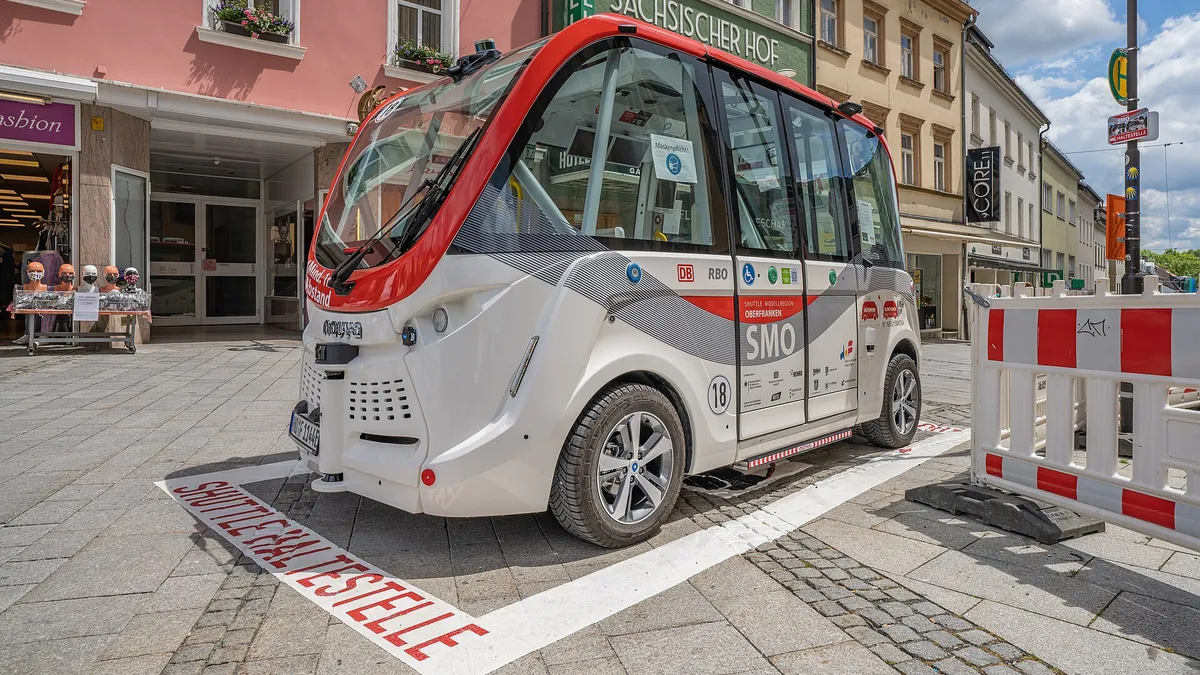
Symbolic image · Photo: PantheraLeo1359531 / Wikimedia Commons, CC BY 4.0 (cropped and resized)
Researchers at TU Graz, together with Tongji University, Wenzhou University and the company Seisys in China, are developing an autonomous mobility service meant to combine the convenience of a private car with the efficiency of public transport. A battery-electric, self-driving shuttle bus for up to 15 people is to run on demand around the clock – without fixed routes or timetables, flexibly within a wider route network. The project was funded by the Austrian Research Promotion Agency FFG.
The vehicle navigates with lidar, radar and cameras and is connected via 5G to smart infrastructure such as cameras at blind spots. This lets it detect pedestrians and cyclists in real time even when its own sensors cannot see them. If the network fails, an independent safety function brings the bus to a controlled stop. The safety concept was tested in high-fidelity simulations of real streets; the Chinese university partners also developed an optimisation system for routes and charging.
A test vehicle is already operating on a test route in real traffic in China, and demonstrators are also planned in Austria – TU Graz gives no dates. "It is precisely high-capacity utilisation that helps to reduce our carbon footprint," says project manager Cornelia Lex of the Institute of Automotive Engineering.