
Hormone-free contraception: new copper IUD shows protection over six years in study
A low-dose copper IUD showed a low pregnancy rate over six years in a US study. The data are an interim analysis by the developer without a comparison group.
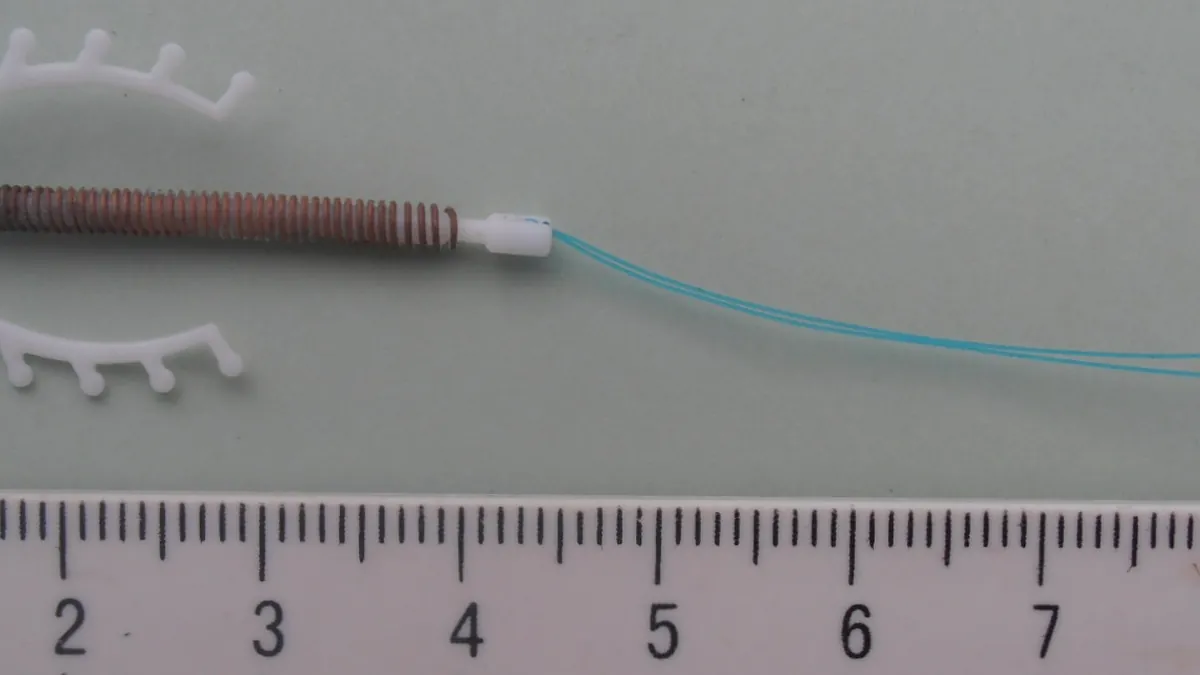
Symbolic image · Photo: Sarang / Wikimedia Commons, Public domain (cropped and resized)
People who want hormone-free contraception often choose a copper IUD. For a new, low-dose version called Miudella, data now cover six years of use: the cumulative Pearl Index – which indicates how many of 100 women become pregnant in a year despite contraception – was 0.93, and after six years 3.9 per cent of participants had become pregnant according to the Kaplan-Meier estimate. This was announced on 16 October by drugmaker Organon, which licensed the global rights in June. Developer Sebela Women's Health presented the results on 17 October at the Society of Family Planning annual meeting in San Francisco.
The phase 3 study is being conducted at 42 sites in the US among women of reproductive age and has no comparison group. According to the trade outlet Contemporary OB/GYN, 465 of 1,397 participants were included in the six-year pregnancy analysis and 592 of 1,601 in the safety analysis – meaning many women had already left the study. The most common side effects included heavy menstrual bleeding, painful periods and pelvic discomfort. Because of bleeding or pain, 8.7 per cent had the device removed in the first year and 1.9 per cent in the sixth.
In the US, the IUD is so far approved for up to three years; according to the manufacturer, the Food and Drug Administration is expected to decide on an extension to six years in the second quarter of 2027. The product carries a boxed warning: improper insertion raises the risk of complications, and clinicians must be trained beforehand. The study is being run by the developer Sebela itself; the figures are preliminary interim results presented at a scientific meeting. Which method is suitable should be decided individually in gynaecological counselling.
This article is for information only and is not legal, tax, financial or medical advice. Figures as of the date stated.