
Iran shifts tactics against Hormuz shipping ahead of US vote, officials say
At least 10 vessels have been attacked since Sunday, the most since the war began. Iran's Revolutionary Guards say a cargo ship sank after hitting a mine.
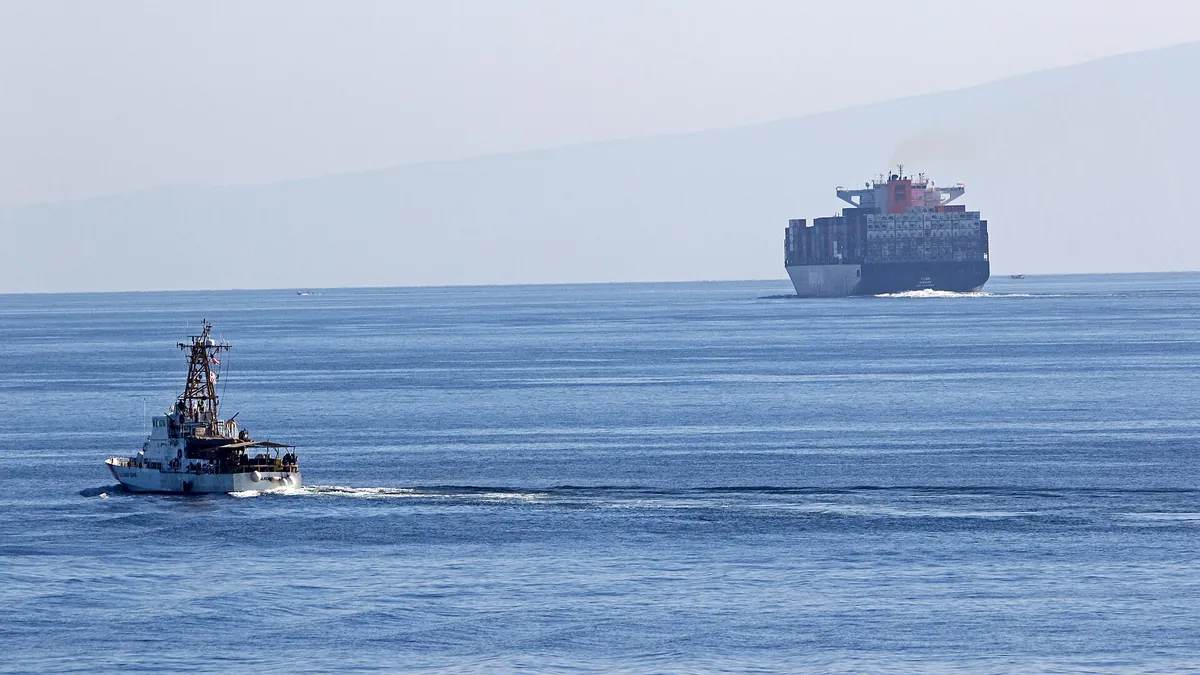
Symbolic image · Photo: MC2 Indra Beaufort / Wikimedia Commons, Public domain (cropped and resized)
Iran is using new tactics against shipping in the Strait of Hormuz to keep oil prices high and sway the Nov. 3 U.S. midterm elections, two senior Iranian officials told Reuters, with one saying the approach began about 10 days ago. At least 10 vessels have been attacked in or near the strait since Sunday, the highest level since the war began, CBS News reported. Twenty-three attacks have been recorded in October, almost double the monthly average.
Iran's Revolutionary Guards said a cargo ship carrying 2,500 containers sank after striking a naval mine, the first time Iran has reported a ship sinking after hitting a mine in the war. The claim could not be immediately verified. In August, Trump said the strait had been "totally cleared" of mines. Vanguard said the container ship GFS Pride sank, while the fate of the tanker Alfonso was unknown. U.S. Central Command said its forces destroyed an Iran-affiliated dhow in the Gulf of Oman last week after the crew was "safely removed."
The fallout is reaching American consumers. U.S. consumer prices rose 3.7% in September from a year earlier, up from 3.4%, with energy prices up 20.4%. Gasoline averaged $4.33 a gallon, compared with $2.98 before the war. "The energy shock is really the headline story today," White House economic adviser Kevin Hassett told Fox Business, blaming Houthi attacks on Saudi oil facilities. Brent crude traded around $105 a barrel, up from $98 on Sept. 30.